
This shrimp coconut curry is my go-to when I want something rich and soothing without spending hours in the kitchen. The creamy coconut sauce balances the sweetness of the shrimp perfectly, making each bite feel indulgent yet effortless. I love how the aroma of ginger and garlic fills the house as it simmers—like a warm hug after a long day.
What makes this dish special is how quick it comes together, especially on busy weeknights. It’s a cozy, satisfying bowl that feels like a little celebration of simple ingredients. Plus, the vibrant flavors and silky texture make it feel fancy enough for guests but easy enough to whip up on a whim. It’s my little reminder that comfort food can also be elegant.
Focusing on how the rich, creamy coconut sauce balances the natural sweetness of shrimp, creating a dish that feels both indulgent and effortless, perfect for cozy nights when you need comfort but want something quick and satisfying.
Balancing sweetness and spice
- This dish reminds me of lazy Sunday afternoons in coastal towns, where the aroma of coconut and spice lingers long after the meal ends.
- I felt a rush of pride the first time I made this for friends; they couldn’t believe how simple yet luxurious it was.
- There’s a nostalgic comfort in the creamy sauce that’s both indulgent and familiar, like a warm blanket on a cold night.
- Cooking this recipe feels like a small victory—getting that perfect balance of heat and sweetness takes practice but pays off every time.
- Every time I make this, I’m transported back to tropical markets, the vibrant colors and lively chatter echoing in my mind.
The story behind this recipe
- This recipe started from a messy night when I needed dinner fast but craved something creamy and warming. I remembered a tiny seaside shack I visited years ago, where coconut and seafood danced on the grill. That memory stuck with me, inspiring me to combine those flavors into something quick and comforting at home.
- I’ve always loved how coconut milk can turn a simple dish into something indulgent without much fuss. It’s like a warm, edible hug—rich, soothing, but still fresh and vibrant. Making this curry feels like capturing a little piece of that coastal magic, right in my own kitchen.
- I keep coming back to this dish because it’s honest—no complicated techniques, just good ingredients that come together fast. It’s become a staple when I want to impress without stress, or when I need a reminder that sometimes, simplicity really is best.
Historical and Cultural Roots
- This dish blends coastal Southeast Asian flavors with a Western twist, reflecting trade routes that brought spices and ingredients across oceans.
- Coconut curry recipes like this one have roots in Thai and Malaysian cuisine, but variations appear throughout the Indian Ocean rim, adapting to local ingredients.
- The use of shrimp in curry became popular in coastal regions where fresh seafood was abundant, making it a quick, flavorful meal for fishermen and their families.
Key ingredients and tips
- Shrimp: I prefer raw, deveined shrimp with tails on for better flavor and presentation. You can use frozen, just thaw completely and pat dry—excess water can make the curry watery.
- Coconut Milk: I lean toward full-fat canned coconut milk for richness, but light coconut milk works if you want a less creamy sauce—just expect a thinner consistency and milder coconut flavor.
- Red Curry Paste: This is the flavor backbone, so don’t skimp. The smoky, spicy punch really brings the dish alive—try a good-quality brand for depth.
- Lime Juice: Brightens everything up. I always squeeze fresh lime at the end—canned lime juice just doesn’t have that zing, and the dish benefits from that fresh citrus pop.
- Ginger & Garlic: Fresh is best—peeled and minced just before cooking for that pungent, aromatic kick. Dried ginger or garlic powder can be a decent shortcut if you’re in a pinch, but they won’t pack the same punch.
- Vegetables (optional): Bell peppers or spinach add color and texture. I toss in quick-cooking greens at the end or sliced peppers early, until they soften and release their sweetness—avoid overcooking to keep their vibrancy.
- Oil & Seasonings: Use a neutral oil like grapeseed or canola for cooking the curry paste. Salt helps balance the heat, so season gradually and taste as you go—over-seasoning early can be tricky to fix.
Spotlight on key ingredients
Shrimp:
- I prefer raw, deveined shrimp with tails on for better flavor and presentation. You can use frozen, just thaw completely and pat dry—excess water can make the curry watery.
- Coconut Milk: I lean toward full-fat canned coconut milk for richness, but light coconut milk works if you want a less creamy sauce—just expect a thinner consistency and milder coconut flavor.
Coconut Milk & Lime:
- Red Curry Paste: This is the flavor backbone, so don’t skimp. The smoky, spicy punch really brings the dish alive—try a good-quality brand for depth.
- Lime Juice: Brightens everything up. I always squeeze fresh lime at the end—canned lime juice just doesn’t have that zing, and the dish benefits from that fresh citrus pop.
Notes for ingredient swaps
- Dairy-Free: Use almond or cashew milk instead of coconut milk. Expect a lighter, less creamy sauce, but still rich and nutty.
- Shellfish Swap: Replace shrimp with scallops or firm white fish. They cook quickly and keep the silky texture, but may lose some sweetness.
- Vegetable Variations: Use sliced zucchini or mushrooms instead of bell peppers. They absorb flavors well and add earthy notes.
- Spice Level: Adjust curry paste or add chopped chili for more heat, or reduce for milder, everyday comfort.
- Fresh Herbs: Garnish with cilantro or Thai basil instead of parsley. They give a fragrant, bright finish that elevates the dish.
- Sweetener: Add a splash of honey or maple syrup if you like a touch of sweetness to balance spice and acidity.
- Acid Boost: Swap lime juice for lemon or vinegar if you prefer a different tang, keeping the bright, sharp contrast.
Equipment & Tools
- Medium skillet: For cooking the curry evenly.
- Knife: To prep vegetables and herbs.
- Wooden spoon: To stir and combine ingredients gently.
- Measuring spoons: To add precise seasonings and lime juice.
- Can opener: To access coconut milk from the can.
Step-by-step guide to shrimp coconut curry
- Equipment & Tools: Gather a medium-sized skillet with a lid for simmering, a sharp knife for prep, a wooden spoon for stirring, measuring spoons, and a can opener for coconut milk.
- Heat 1 tbsp of neutral oil over medium heat (about 160°C/320°F). Add 2 tbsp of red curry paste. Cook, stirring, until fragrant—about 1 minute. You’ll smell the spices waking up, a little smoky and pungent.
- Add 1 cup of diced onion and 1 sliced bell pepper (if using). Cook for 3-4 minutes until they soften and release their aroma—sweet and slightly caramelized. If they stick, splash a tiny bit of water or stock.
- Pour in 1 can (400ml) of full-fat coconut milk. Stir to combine with the curry paste. Bring to a gentle simmer (about 80°C/175°F). Watch for a slight crackle and a glossy, vibrant sauce that’s not boiling too hard.
- Add 1 lb of raw, deveined shrimp, tails on if desired. Cook for 3-4 minutes, stirring occasionally. The shrimp should turn pink and opaque, and the sauce will thicken slightly—like a silky veil. If overcooked, they turn rubbery—remove early if they turn firm.
- Squeeze in the juice of 1 lime and stir in 1 tsp of grated fresh ginger and minced garlic. Cook for another minute until bright and fragrant, then taste and adjust salt or lime if needed.
- Turn off heat. Let the curry rest for 2 minutes to allow flavors to meld and sauce to thicken. Serve hot over rice, garnished with fresh herbs if you like—basil or cilantro make nice touches.
- Check for doneness: shrimp are firm and pink, sauce is glossy and coats the back of a spoon, aroma is spicy and fragrant. If the curry is too thin, simmer a few minutes longer; if too thick, splash in a little water.
Let the curry sit for 2 minutes off heat, allowing flavors to deepen. Serve immediately over steamed rice, garnished with fresh herbs if desired. The sauce should be silky and fragrant, the shrimp perfectly cooked, and the aroma irresistible.
How to Know It’s Done
- Shrimp are opaque and firm, not translucent.
- Sauce is thick, glossy, and clings to ingredients.
- Aromas of spices, garlic, and ginger are fragrant and vibrant.
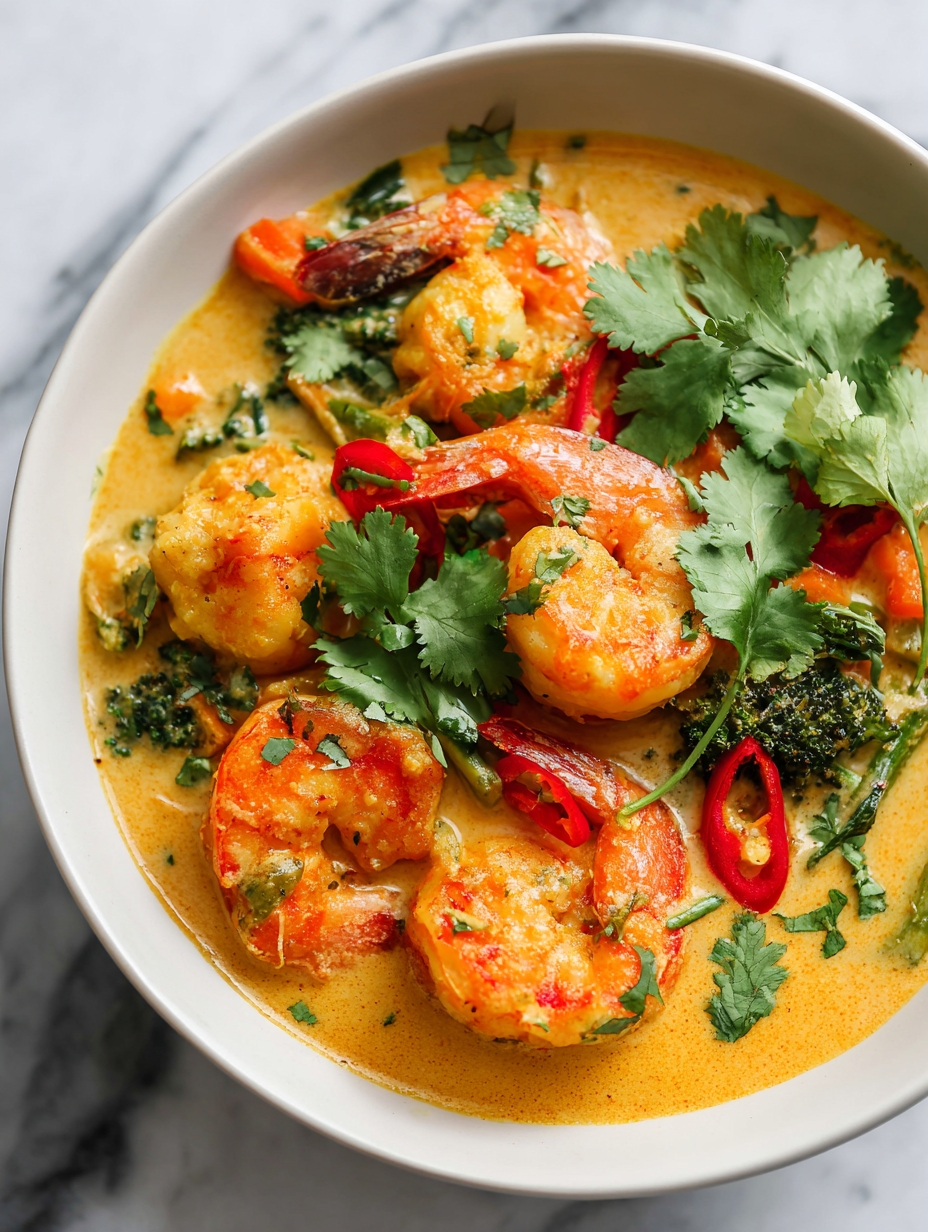
Shrimp Coconut Curry
Ingredients
Equipment
Method
- Heat a medium skillet over medium heat and add the neutral oil. Once shimmering and fragrant, stir in the red curry paste and cook for about 1 minute until it releases a spicy aroma.
- Add the diced onion and sliced bell pepper (if using) to the skillet. Cook for 3-4 minutes, stirring occasionally, until the vegetables soften and the mixture becomes slightly fragrant and translucent.
- Pour in the entire can of coconut milk, stirring well to combine with the curry paste. Bring the mixture to a gentle simmer, watching for a glossy, vibrant sauce that bubbles softly around the edges.
- Gently add the raw shrimp to the simmering sauce, spreading them evenly. Cook for 3-4 minutes, stirring gently once or twice, until the shrimp turn opaque and pink and the sauce thickens slightly.
- Stir in the grated ginger and minced garlic, cooking for a further minute until fragrant. Squeeze fresh lime juice over the curry and taste, adjusting with salt as needed for balance.
- Turn off the heat and let the curry rest for a couple of minutes to allow flavors to meld and the sauce to thicken to a silky consistency.
- Serve the shrimp coconut curry hot over steamed rice, garnished with fresh herbs like cilantro or Thai basil if desired. The sauce should be glossy and fragrant, with perfectly cooked shrimp ready to enjoy.
Pro tips for shrimp coconut curry
- Bolded mini-head: Use fresh ginger and garlic. Their pungency and aroma wake up the curry, making it vibrant and fragrant.
- Bolded mini-head: Cook the curry paste slowly. Let it sizzle gently for 1 minute until it turns fragrant—this develops deep flavor without burning.
- Bolded mini-head: Add coconut milk gradually. Stir well between additions to prevent curdling and ensure a silky, even sauce.
- Bolded mini-head: Keep an eye on the shrimp. As soon as they turn pink and opaque, remove from heat to avoid rubbery texture.
- Bolded mini-head: Squeeze lime juice at the end. Bright citrus balances richness and enhances all the spices, adding a fresh zing.
- Bolded mini-head: Taste and adjust seasonings at the end. Salt, lime, or a pinch of sugar can fine-tune the flavor, making the dish shine.
- Bolded mini-head: Rest the curry for 2 minutes off heat. Letting it sit allows flavors to meld and the sauce to thicken perfectly.
Common mistakes and how to fix them
- FORGOT to adjust heat after adding shrimp → turn heat to low immediately to prevent overcooking.
- DUMPED too much coconut milk at once → add gradually, stirring to control sauce consistency.
- OVER-TORCHED the curry paste → cook on medium heat, stirring constantly to avoid burning spices.
- SKIPPED tasting and adjusting seasonings → taste and tweak salt or lime early for balanced flavor.
Quick fixes and pantry swaps
- If sauce is too thin, simmer for a few more minutes until it thickens and shimmers.
- Splash a bit of water or broth to rescue a curry that’s too salty or intense.
- Patch overcooked shrimp with fresh ones if texture turns rubbery or overdone.
- When curry smells burnt, lower heat immediately and add a splash of coconut milk to cool.
- Shield against spice burn by adding a dollop of yogurt or coconut cream if too fiery.
Prep, store, and reheat tips
- Prep the curry base: sauté the paste, onions, and peppers up to a day in advance; cool and refrigerate for a fresh, aromatic start.
- Thaw and dry shrimp thoroughly before cooking; excess moisture can thin the sauce—store in an airtight container for up to 24 hours.
- Store leftovers in a sealed container for up to 2 days; the coconut sauce may thicken, so whisk in a splash of warm water or broth when reheating.
- Reheat gently on the stove over low heat, stirring often; look for a silky texture and fragrant aroma, avoid boiling to prevent separation.
- The flavors deepen overnight, so consider adjusting seasoning after reheating with a squeeze of lime or a pinch of salt for balance.
Top questions about shrimp coconut curry
1. Can I use frozen shrimp?
Use fresh or thawed raw shrimp, deveined with tails on for flavor. Frozen works if thawed and patted dry.
2. Is full-fat coconut milk necessary?
Full-fat coconut milk gives a rich, creamy sauce. Light coconut milk makes it lighter but less luscious.
3. How do I make it spicier or milder?
Adjust the spice by adding more curry paste for heat or reducing it for milder flavor.
4. When should I add lime juice?
Fresh lime juice brightens the dish. Squeeze it in at the end for a citrus punch.
5. How long should I cook the curry paste?
Cook the curry paste slowly until fragrant, about 1 minute, to develop deep flavor without burning.
6. How do I know when the shrimp are done?
Simmer the curry until the shrimp turn opaque and pink, about 3-4 minutes. The sauce should be glossy.
7. What oil is best for this curry?
Use a neutral oil like canola or grapeseed for cooking. It won’t overpower the flavors.
8. Can I substitute the vegetables?
You can swap bell peppers with zucchini or spinach for different textures and flavors.
9. How do I reheat leftovers?
Reheat gently on the stove, stirring often. Add a splash of water if the sauce thickens too much.
10. What if the sauce is too watery?
If the sauce is too thin, simmer a few extra minutes until it thickens and shimmers.
This dish has become my quick comfort, especially on nights when I need something rich but don’t want to spend hours in the kitchen. The aroma of coconut and spice filling the house is a small, satisfying reminder that simple ingredients can create something memorable.
Sharing this curry with friends or family feels like a little celebration of how effortless yet satisfying good food can be. It’s a dish that reminds me that warmth and flavor don’t have to come from complicated techniques—just honest, well-chosen ingredients and a bit of patience.