
This shrimp lemon pasta is the kind of dish that feels fancy but isn’t fussy. It’s bright, quick, and relies on a handful of ingredients that come together in a flash. I love how the lemon gives it a fresh, almost spring-like punch, especially on nights when I want something uplifting without spending hours at the stove.
I’ve made this recipe a hundred times, tweaking a little here, a little there. The key is balancing the zest and juice — too much lemon can tip things sour, but just enough brightens the shrimp and pasta perfectly. It’s one of those meals that feels like a little celebration, even if it’s just a weeknight dinner. Bright, simple, and honestly, pretty addictive.
This recipe focuses on balancing the bright, zesty punch of lemon with the tender, sweet shrimp, creating a dish that’s both refreshingly simple and unexpectedly complex in flavor. I love how the lemon’s acidity cuts through the richness of butter and pasta, making each bite feel lively and satisfying. It’s a kind of culinary dance—quick, vibrant, and perfect for those nights when you want something bright but don’t want to fuss.
A Bright Twist on Classic Shrimp
- This dish reminds me of summer evenings on the coast, where the air smells of salt and lemon zest.
- I feel a rush of pride every time I serve this, watching friends marvel at how simple ingredients shine.
- Cooking this feels like a quick escape—something bright and lively, even after a long day.
- There’s a nostalgic joy in how the lemon cuts through the buttery richness, making every bite lively.
- I love how this recipe has become my go-to when I want a cozy, yet vibrant dinner in under 30 minutes.
The spark behind this dish
- This recipe started from a simple craving for something bright and quick, but I wanted to elevate it with a little unexpected twist. One evening, I found myself rummaging through my fridge and came across a lemon that looked like it had seen better days, but the aroma was still vibrant. That spark of spontaneity led me to add more zest and a splash of lemon juice, transforming the dish into something lively and fresh.
- Over time, I kept tweaking the balance—less garlic, more lemon, a touch of chili flakes—and each version felt brighter than the last. It’s become a dish I turn to when I need a dinner that’s both comforting and invigorating, especially after long days or when I want to impress without fuss. The lemon’s acidity cuts through the richness of the shrimp and butter, making every bite feel lively and satisfying.
- heading: ‘The spark behind this dish’
Trivial and Historical Insights
- This dish has roots in Mediterranean coastal cuisines, where lemon and seafood combine fresh and vibrant flavors.
- The use of lemon in pasta dishes became popular in Italy’s Amalfi Coast, embracing bright citrus against the sea’s bounty.
- Historically, lemon was a symbol of prosperity and freshness, often used to preserve seafood and add zest to simple meals.
Ingredient breakdown
- Shrimp: I prefer wild-caught, large shrimp—they have a sweeter, juicier bite that really pops when cooked just right. You can swap with prawns if needed, but adjust cooking time to avoid overcooking and rubbery texture.
- Lemon: Fresh lemon zest and juice are non-negotiable for that bright, zingy punch. If you only have bottled lemon juice, use half as much to avoid overpowering the dish, but add zest if possible for that zingy aroma.
- Garlic: I love a generous amount of fresh garlic for its pungent, warm aroma that mellows into sweetness as it cooks. For a milder flavor, reduce the garlic or substitute with garlic powder, but don’t skip it entirely—this is the backbone of the sauce.
- Butter: I use unsalted butter to control the saltiness and get that velvety, rich sauce. Dairy-Free: Swap with coconut oil or margarine, which adds a different richness but can slightly alter the flavor profile—think tropical and slightly sweet.
- Pasta: I lean towards linguine or fettuccine, which hold the sauce well. Gluten-Free: Use rice pasta or chickpea pasta—just note they cook faster and have a different texture, so keep an eye on them to avoid mushiness.
- Olive Oil: A good splash for sautéing the garlic and shrimp—extra virgin has the best flavor. If you’re out, a neutral oil like canola works fine, but the flavor won’t be as fruity and robust.
- Red Pepper Flakes: Just a pinch to add a subtle heat that sneaks up on you. Feel free to skip or reduce if spice isn’t your thing, but it really balances the citrus and shrimp’s sweetness.
Spotlight on key ingredients
Shrimp:
- I prefer wild-caught, large shrimp—they have a sweeter, juicier bite that really pops when cooked just right. You can swap with prawns if needed, but adjust cooking time to avoid overcooking and rubbery texture.
- Lemon: Fresh lemon zest and juice are non-negotiable for that bright, zingy punch. If you only have bottled lemon juice, use half as much to avoid overpowering the dish, but add zest if possible for that zingy aroma.
Lemon:
- The lemon’s aroma is sharp and invigorating, with a slightly sweet citrus scent. During cooking, it releases a bright, almost effervescent fragrance that lifts the entire dish, making it feel lively and fresh.
- ingredient
Notes for ingredient swaps
- Seafood: Swap shrimp with scallops or firm white fish—each brings a different texture but still pairs nicely with lemon.
- Lemon: Use bottled lemon juice in a pinch, but reduce the quantity by half to avoid overpowering the dish; add zest if you have it.
- Pasta: Replace with gluten-free options like rice or chickpea pasta—be mindful of different cooking times and textures.
- Butter: Dairy-Free? Try coconut oil or a neutral oil like avocado—these will alter the richness slightly but keep the dish lively.
- Garlic: If fresh is unavailable, garlic powder can work—use half as much, and add early to develop flavor.
- Olive Oil: Canola or vegetable oil are neutral substitutes, but they won’t add the fruity aroma of extra virgin olive oil.
- Red Pepper Flakes: Omit for milder heat, or substitute with a dash of smoked paprika for a smoky undertone.
Equipment & Tools
- Large pot: Cook the pasta evenly.
- Skillet: Sear shrimp and make sauce.
- Tongs: Handle pasta and shrimp without breaking them.
- Zester: Extract bright lemon zest.
- Sharp knife: Prep garlic and lemon.
Step-by-step guide to shrimp lemon pasta
- Equipment & Tools: Gather a large pot for pasta, a skillet (preferably non-stick), tongs, a zester, and a sharp knife. The pot will cook the pasta, the skillet will sear the shrimp and make the sauce, tongs for handling pasta and shrimp, zester for lemon zest, and knife for prep.
- Bring a large pot of salted water to a boil at 100°C (212°F). Add pasta and cook according to package instructions (about 8-10 minutes) until al dente. Drain, reserving ½ cup of pasta water.
- While pasta cooks, peel and devein the shrimp if needed. Pat dry. Zest one lemon and then juice it, keeping both separate. Mince 3 cloves of garlic.
- Heat the skillet over medium heat (about 160°C/320°F). Add a tablespoon of olive oil. Toss in garlic and sauté until fragrant, about 30 seconds. Watch for a golden hue and fragrant aroma.
- Add shrimp to the skillet. Cook for 2-3 minutes per side until they turn pink and opaque. If shrimp curl tightly into a ‘C,’ they’re done. If overcooked, they become rubbery; reduce heat or remove early.
- Lower heat, add 2 tablespoons of butter to the skillet, and stir until melted. Pour in lemon juice, lemon zest, and a pinch of red pepper flakes. Let the sauce simmer gently for 1 minute, smelling the bright lemon and buttery richness.
- Toss cooked pasta into the skillet, adding a splash of reserved pasta water to loosen the sauce. Mix well, ensuring the pasta is coated evenly. Adjust seasoning with salt or more lemon juice if needed.
- Rest the pasta in the skillet for 1-2 minutes to absorb flavors. Serve immediately, garnished with fresh herbs if desired. Plate with a lemon wedge for extra brightness.
- Resting & Finishing: Let the pasta sit for a minute or two off heat, then serve hot. Finish with a sprinkle of extra lemon zest or herbs. Enjoy the lively, aromatic experience.
- Checkpoints & How to Know It’s Done: Shrimp are opaque and firm. The sauce is glossy and fragrant. Pasta is cooked al dente, with a slight bite and coated in sauce.
Allow the pasta to sit for a minute off heat to absorb flavors. Serve immediately, garnished with lemon wedges or herbs. Squeeze extra lemon if desired for an extra zing.
How to Know It’s Done
- Shrimp: Fully opaque, pink, and firm to touch.
- Sauce: Glossy, fragrant, with a bright lemon aroma.
- Pasta: Al dente, slightly resistant to bite, coated evenly.
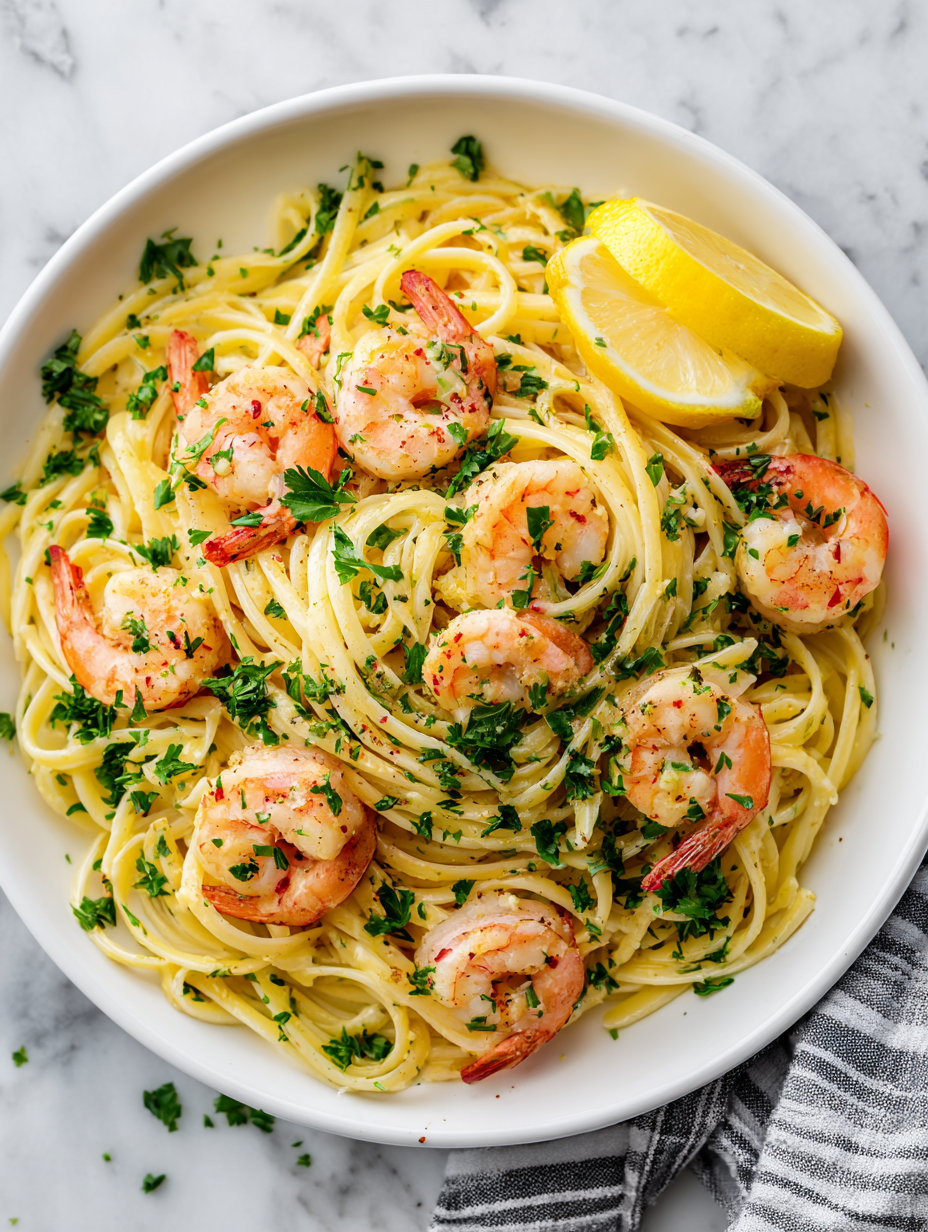
Shrimp Lemon Pasta
Ingredients
Equipment
Method
- Bring a large pot of salted water to a boil, then add the pasta and cook until al dente, about 8-10 minutes. Drain and set aside, reserving a little pasta water.
- While the pasta cooks, zest the lemon and juice it, keeping both separate. Mince the garlic cloves finely.
- Heat a skillet over medium heat and add olive oil. Once shimmering, toss in the minced garlic and sauté until fragrant, about 30 seconds, until golden and aromatic.
- Add the shrimp to the skillet and cook for 2-3 minutes per side, until they turn pink and opaque. Use tongs to turn them gently and watch for a slight curl.
- Lower the heat and add the butter to the skillet, stirring until melted and glossy. Pour in the lemon juice and sprinkle in the lemon zest and red pepper flakes. Let the sauce simmer gently for 1 minute, releasing a bright, citrusy aroma.
- Add the cooked pasta to the skillet, tossing gently to coat it with the lemony sauce. If needed, splash in a bit of reserved pasta water to loosen the sauce and help it cling to the noodles.
- Cook everything together for another minute, allowing the flavors to meld and the sauce to thicken slightly. Taste and season with salt and pepper as needed.
- Serve immediately, garnished with additional lemon zest or herbs if desired, and enjoy the vibrant, buttery, citrusy flavor of this bright dish.
Pro tips for perfect shrimp lemon pasta
- Use high heat for shrimp to get a quick, caramelized edge that locks in juices.
- Sauté garlic just until fragrant—avoid browning to prevent bitterness and maintain that warm aroma.
- When adding lemon juice, do it off-heat to keep the bright, fresh flavor intact.
- Reserve some pasta water—it’s starchy and perfect for loosening the sauce without diluting flavor.
- Cook the pasta al dente; it will finish absorbing flavors off the heat and stay firm in the sauce.
- Toss the shrimp and pasta together in the skillet for even coating and a quick flavor meld.
- Finish with a squeeze of lemon and a sprinkle of herbs immediately before serving for maximum freshness.
Common mistakes and how to fix them
- FORGOT to adjust heat after adding lemon juice → do so immediately to prevent curdling.
- DUMPED pasta water without tasting → reserve and taste to adjust sauce consistency.
- OVER-TORCHED shrimp → remove early and reduce heat to avoid rubbery texture.
- MISSED garlic sautéing step → sauté until fragrant, not browned, to avoid bitterness.
Quick kitchen fixes
- When sauce is too thin, splash in a bit more pasta water and simmer briefly.
- If shrimp are overcooked, quickly toss them in ice water to halt cooking and retain juiciness.
- Splash lemon juice when sauce dulls—sharpen flavor and brighten the dish instantly.
- Patch a burnt sauce by removing from heat immediately and adding a splash of cold water.
- Shield delicate pasta from sticking by tossing with a drizzle of olive oil before serving.
Prep, store, and reheat tips
- Prepare the lemon zest and juice ahead of time; store in an airtight container in the fridge for up to 2 days. The bright aroma helps brighten the dish immediately.
- Peel and devein shrimp in advance; keep covered in the fridge for up to 1 day. Rinse and pat dry before cooking to prevent excess moisture.
- Cook the pasta al dente, then toss with a little olive oil to prevent sticking; store in an airtight container in the fridge for up to 1 day. Reheat gently to avoid mushiness.
- Make the lemon garlic sauce up to a day ahead; store in a sealed jar in the fridge. Reheat gently over low heat, smelling that fresh citrus and buttery richness wake up.
- Shrimp and pasta flavors will mellow slightly overnight, so add a splash of lemon juice or fresh herbs when reheating to refresh the brightness.
Top questions about shrimp lemon pasta
1. Can I use bottled lemon juice?
Use fresh lemon juice for that bright, tangy punch, and zest for extra aroma. Bottled lemon works in a pinch but won’t be as lively.
2. Can I substitute the shrimp?
Yes, you can swap shrimp with scallops or chicken, but adjust cooking times. Shrimp cook quickly, so don’t overdo it.
3. How do I know when the pasta is done?
Cook pasta until al dente—firm to bite but cooked through. It should feel slightly resistant, not mushy.
4. When should I add lemon juice?
Add lemon juice off the heat to keep its fresh flavor bright. Stir well and taste before serving to balance acidity.
5. Can I make this ahead?
Yes, refrigerate leftovers in an airtight container for up to 2 days. Reheat gently in a skillet, adding a splash of water or lemon for freshness.
6. How do I avoid overcooking the shrimp?
Overcooked shrimp become rubbery. Remove them when they turn pink and curl into a C shape—just about 2-3 minutes per side.
7. Can I use a different oil?
Use good quality olive oil for sautéing garlic and shrimp. It adds a fruity aroma and richer flavor to the dish.
8. How do I combine everything properly?
Stir the pasta and sauce together in the skillet for even coating. Finish with lemon zest or herbs for a fresh burst.
9. Can I make it less spicy?
Adjust spice levels by adding or reducing red pepper flakes. For milder flavor, omit or use smoked paprika for depth.
10. Can I freeze leftovers?
Yes, you can freeze cooked shrimp and pasta separately for up to a month. Reheat in a skillet with fresh lemon for best flavor.
This dish isn’t just about the bright lemon and tender shrimp—it’s about capturing a moment of simplicity that still feels special. It’s quick enough for a weeknight but complex enough to serve to guests without fuss.
Whenever I make this, it reminds me that honest ingredients, when balanced right, can turn into something quite memorable. It’s a little burst of freshness in the middle of busy days, and I keep coming back to it, season after season.