
Shrimp pesto pasta might seem like an everyday dish, but I’ve always loved how it balances richness with freshness. The way the bright, herbaceous pesto clings to tender shrimp and al dente pasta keeps me coming back, especially when I want something quick but satisfying. It’s one of those recipes that feels like a little celebration in a bowl, even on busy weeknights.
What makes this dish stand out is how I tweak the pesto to match my mood—sometimes extra lemon, sometimes a handful of basil for a greener punch. The shrimp need just the right touch of caramelization, which adds a smoky depth that elevates the whole thing beyond simple pasta. It’s honest, unpolished comfort food with a layer of complexity that surprises me every time.
Focusing on the underappreciated art of balancing bold pesto with the delicate sweetness of shrimp, this recipe explores how the right amount of heat and texture contrast can turn a simple pasta dish into a memorable midweek meal.
Balancing Boldness and Sweetness
- This dish reminds me of summer evenings by the coast, where fresh seafood and basil were always within reach.
- I love how a simple squeeze of lemon can brighten the whole plate and make the flavors dance.
- There’s a quiet pride in mastering a pesto that’s just herbaceous enough without overpowering the shrimp’s sweetness.
- Cooking this feels like a small act of rebellion—taking humble ingredients and turning them into something special.
- Sharing this with friends always sparks conversations about favorite pasta memories and secret tweaks.
Personal Inspiration
- This recipe came together one hectic evening when I realized I had a handful of shrimp and a jar of pesto that needed using. I wanted something quick, bright, and satisfying, not mindless but with a little flair. I’ve always thought pesto is underrated as a sauce, especially for seafood—it’s like an herb-driven hug that balances richness without overpowering.
- Over the years, I’ve played with how I cook the shrimp—aiming for that perfect caramelized edge that’s smoky and sweet. Combining it with the vibrant, oily pesto and a quick toss of hot pasta feels like a small act of culinary rebellion after a long day. Every time I make it, I remember that sometimes, simple ingredients just need a little love and a hot pan.
- heading: ‘The story behind this recipe’
Historical & Cultural Insights
- Shrimp pesto pasta likely originated from Italy, where both seafood and basil-based sauces are staples, but it gained popularity in American kitchens in the late 20th century.
- The combination of seafood and pesto is a modern twist, blending coastal freshness with herbaceous richness, reflecting a trend toward lighter, more vibrant pasta dishes.
- Pesto itself has ancient roots in Liguria, Italy, but its pairing with shrimp is a relatively recent culinary invention, born from the desire to elevate simple ingredients quickly.
Key Ingredients and Tips
- Shrimp: I love how quickly shrimp cook to a tender, slightly firm bite, releasing a briny aroma. For best texture, don’t overcook; aim for a pink hue with a slight translucence in the center. If they turn rubbery, reduce cooking time or lower heat.
- Pesto: Fresh basil pesto is vibrant and oily, with a fragrant, herbaceous punch. I prefer homemade for brightness, but store-bought works in a pinch — just stir in a little extra olive oil if it feels thick or dull. For a nuttier note, toss in some toasted pine nuts.
- Pasta: Al dente is the key here — firm but tender. I usually cook mine slightly less than package directions because it will continue to soften when tossed with hot pesto and shrimp. Save a cup of pasta water; it’s magic for looseness and flavor.
- Olive Oil: Use a good-quality extra virgin — it’s the base flavor for sautéing shrimp and finishing the dish. I add a splash at the end for sheen and richness. If you prefer less oil, cut back but keep some for that silky mouthfeel.
- Lemon: Brightens everything with a zesty, citrusy kick. I squeeze fresh lemon just before serving — the aroma of fresh lemon zest and juice really lifts the dish. Skip if you’re super sensitive to acidity, but it adds a fresh pop.
- Garlic: I love how minced garlic infuses the oil with a warm, pungent aroma as it cooks. Be careful not to burn it — just a minute on medium heat until fragrant. If you prefer milder flavor, reduce the garlic or use garlic-infused oil.
Spotlight on key ingredients
Shrimp:
- I love how quickly shrimp cook to a tender, slightly firm bite, releasing a briny aroma. For best texture, don’t overcook; aim for a pink hue with a slight translucence in the center. If they turn rubbery, reduce cooking time or lower heat.
- Pesto: Fresh basil pesto is vibrant and oily, with a fragrant, herbaceous punch. I prefer homemade for brightness, but store-bought works in a pinch — just stir in a little extra olive oil if it feels thick or dull. For a nuttier note, toss in some toasted pine nuts.
Pesto:
- Bright, oily, bursting with fresh basil aroma. It thickens quickly when cold, so stir in a splash of warm water or oil to loosen it up. It should cling to pasta with a glossy finish, not sit in clumps.
- Olive Oil: Use a good-quality extra virgin for sautéing and finishing. It adds a rich, fruity note that complements the herbs and seafood. If it shimmers gently in the pan, it’s ready for the shrimp.
Notes for ingredient swaps
- Seafood Swap: Crab or scallops can replace shrimp for a more indulgent, sweet flavor. Keep in mind they may cook slightly differently.
- Nut-Free Pesto: Use sunflower seed or pumpkin seed pesto if you’re nut-allergic. It offers a different nuttiness but still vibrant.
- Gluten-Free Pasta: Swap regular pasta for rice noodles or corn pasta to make this dish gluten-free—just watch cooking times carefully.
- Vegan Version: Replace shrimp with grilled zucchini or tempeh, and use a plant-based pesto made with nutritional yeast instead of cheese.
- Lemon Alternatives: Lime or orange zest and juice brighten the dish similarly, but the flavor will shift slightly toward citrus sweetness.
- Oil Choice: Swap olive oil for avocado oil if you prefer a milder, buttery note. It won’t impact flavor much but affects richness.
- Pasta Type: Whole wheat or legume-based pasta adds fiber and a nuttier flavor—cook a little longer to reach al dente.
Equipment & Tools
- Large skillet: Cook and combine shrimp, pesto, and pasta.
- Large pot: Boil pasta efficiently.
- Tongs: Flip shrimp and toss pasta.
- Slotted spoon: Remove shrimp from skillet without excess oil.
- Measuring jug: Reserve pasta water for sauce adjustments.
Step-by-step guide to Shrimp Pesto Pasta
- Equipment & Tools: Use a large, deep skillet (about 30cm or 12 inches) for even heat; a pasta pot for boiling; tongs for flipping; a slotted spoon for shrimp; a spoon for stirring; and a measuring jug for pasta water.
- Bring a large pot of salted water (about 4L or 1 gallon) to a rolling boil at 100°C or 212°F. Add pasta and cook until just al dente, about 1-2 minutes less than package instructions. Reserve 1 cup of pasta water, then drain and set aside.
- While pasta cooks, heat the skillet over medium heat (about 160°C or 320°F). Add 2 tbsp olive oil. Once shimmering, add the shrimp in a single layer. Cook for 2 minutes, then flip. Continue for another 1-2 minutes until pink and opaque. Remove shrimp and set aside.
- In the same skillet, add a touch more olive oil if needed. Toss in minced garlic (about 1 tsp). Cook for 30 seconds until fragrant, but don’t burn it. Add a squeeze of lemon juice (about 1 tbsp) and stir.
- Lower the heat to medium-low. Add the pesto (about 1/2 cup) to the skillet. Stir to loosen with garlic oil. If it seems thick, add a splash of reserved pasta water (a few tablespoons) to make it silky and coat the pasta well. Cook for 1 minute until heated through.
- Toss the drained pasta into the skillet with the pesto. Mix thoroughly, coating every strand. Add the cooked shrimp back in. Taste and adjust with salt, pepper, or more lemon juice as needed. Cook for another 30 seconds, just until everything is hot.
- Check the mixture: the pasta should shimmer with pesto, shrimp should be tender and a bit caramelized, and sauce should be silky. If the sauce is too thick, add more pasta water. If too watery, cook a minute longer to thicken.
- Remove from heat. Rest for 1-2 minutes to let flavors meld. Finish with a drizzle of good olive oil and a sprinkle of grated Parmesan if desired. Serve immediately, garnished with fresh basil or parsley.
Let the dish rest for 1-2 minutes off heat to settle. Finish with a drizzle of olive oil, a squeeze of lemon, and fresh herbs. Plate immediately, enjoying the contrast of warm pasta and aromatic pesto.
How to Know It’s Done
- Shrimp: should be pink, opaque, with a slight caramel crust.
- Pasta: al dente, with a slight chew, coated evenly with pesto.
- Sauce: silky, with a vibrant sheen, no separation or greasiness.
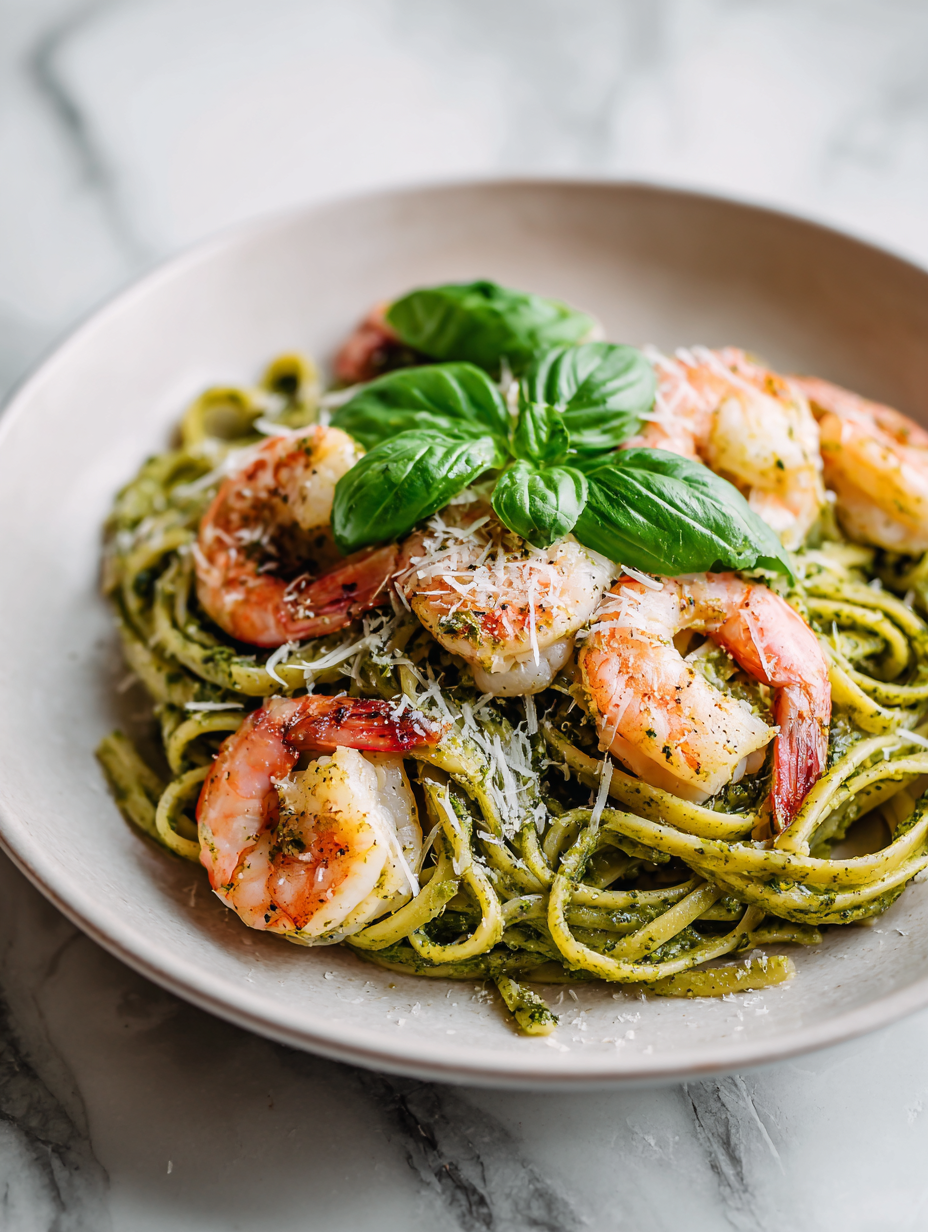
Shrimp Pesto Pasta
Ingredients
Equipment
Method
- Bring a large pot of salted water to a rolling boil and add the pasta. Cook until just al dente, about 1-2 minutes less than package instructions. Reserve 1 cup of pasta water, then drain and set aside.
- While the pasta cooks, heat a large skillet over medium heat and add 2 tablespoons of olive oil. Once shimmering, add the shrimp in a single layer. Cook for about 2 minutes, then flip and cook for another 1-2 minutes until pink and opaque. Remove the shrimp and set aside.
- In the same skillet, add the minced garlic and cook for about 30 seconds until fragrant—listen for a gentle sizzle and smell the warm aroma. Pour in the lemon juice and stir to combine.
- Add the pesto to the skillet and warm it gently over low heat, stirring constantly to prevent burning and preserve its vibrant flavor. If it thickens too much, stir in a splash of reserved pasta water to loosen it up.
- Toss the drained pasta into the skillet with the warmed pesto, stirring well to coat every strand evenly. Add the cooked shrimp back into the pan and gently toss everything together.
- Check the sauce consistency—if it’s too thick, add a bit more of the reserved pasta water to achieve a silky, glossy coating. Taste and adjust with more lemon juice, salt, or pepper if needed.
- Remove from heat and let rest for a minute. Serve hot, garnished with freshly grated Parmesan and chopped herbs if desired.
Notes
Pro tips for Shrimp Pesto Pasta
- garlic: Mince garlic finely and add early to release more aroma and flavor into the oil.
- Brighten with lemon: Squeeze fresh lemon juice just before serving for a zesty, refreshing lift.
- Heat the skillet properly: Ensure the pan is hot enough (around 160°C/320°F) before adding shrimp for perfect caramelization.
- Stir pesto gently: Warm pesto over low heat and stir constantly to prevent burning and preserve its vibrant flavor.
- Reserve pasta water: Keep a cup before draining; it’s your secret weapon to loosen the sauce to silky perfection.
- Cook shrimp precisely: Aim for a pink hue and slight translucence, about 3 minutes total, to avoid rubbery texture.
- Finish with oil: Drizzle a little good-quality olive oil over the dish off heat to add shine and richness.
Common mistakes and how to fix them
- FORGOT to drain pasta thoroughly → Drain well to prevent excess water diluting the sauce.
- DUMPED shrimp straight into hot oil → Sear shrimp in batches to avoid steaming and ensure caramelization.
- OVER-TORCHED pesto when heating → Warm pesto gently over low heat, stirring constantly to preserve flavor.
- MISSED the pasta water reserve → Always save pasta water; it helps loosen and bind the sauce perfectly.
Quick fixes and pantry swaps
- When sauce is too thick, splash in warm pasta water and stir until silky.
- If shrimp are rubbery, reduce cooking time or lower heat for tender results.
- Splash lemon juice at the end for a fresh, bright flavor boost.
- Patch overcooked pesto by stirring in a little olive oil or warm water.
- Shield burning pesto by heating gently over low heat, stirring constantly.
Prep, store, and reheat tips
- Prep the shrimp: peel and devein ahead of time, keeping them covered in the fridge for up to 24 hours. They’ll stay fresh and briny.
- Make the pesto: prepare your pesto a day in advance. Store in an airtight container in the fridge, where it keeps for up to 3 days. Stir well before use to restore shine.
- Cook the pasta: cook and drain the pasta just before serving if you want it hot and fresh. For leftovers, toss with a little olive oil to prevent sticking and store in a sealed container for up to 2 days.
- Reheat gently: warm leftovers over low heat in a skillet, adding a splash of pasta water or olive oil. The aroma of basil and garlic will perk up, and the texture will stay tender.
- Flavor notes: refrigeration may dull the brightness of the pesto slightly, so add a squeeze of lemon or fresh herbs when reheating to revive the dish’s freshness.
FAQs about Shrimp Pesto Pasta
1. How do I know when the shrimp are done?
Cook the shrimp until they turn pink and opaque, about 2-3 minutes per side. They should feel firm but tender. Overcooked shrimp become rubbery, so keep an eye on them.
2. What kind of pesto works best?
Use freshly made or good quality store-bought pesto. If using store-bought, stir in a little olive oil or lemon juice to brighten the flavor.
3. How should I cook the pasta?
Cook your pasta until just al dente, then toss with the warm pesto and shrimp. If the sauce seems too thick, add a splash of reserved pasta water to loosen it.
4. Can I substitute the shrimp?
Yes, you can substitute shrimp with scallops, grilled chicken, or even roasted vegetables for variation. Just adjust cooking times accordingly.
5. Should I add lemon?
Add lemon juice or zest at the end of cooking to brighten the dish. It enhances the herbaceous notes and adds a fresh, tangy aroma that lifts the whole plate.
6. How do I store leftovers?
Store leftovers in an airtight container in the fridge for up to 2 days. Reheat gently in a skillet with a splash of water or oil to preserve moisture and flavor.
7. What equipment do I need?
Use a large skillet to evenly cook the shrimp and toss the pasta. A pasta pot helps boil efficiently, and a slotted spoon is good for handling shrimp without excess oil.
8. What if the pesto gets too thick?
If the pesto becomes too thick or sticky, gently warm it over low heat and stir in a little warm water or olive oil until smooth.
9. Why save pasta water?
Reserve some pasta water before draining. Its starchy, salty goodness helps loosen the sauce and makes everything cling beautifully.
10. How do I prevent burning the pesto?
Avoid overcooking the shrimp or letting the pesto burn. Cook on medium heat, stir constantly, and add lemon juice at the end for freshness.
This dish feels like a little secret—bright, comforting, and just a touch indulgent. The aroma of garlic and basil, combined with the tender shrimp, makes every bite a small celebration. It’s a reminder that simple ingredients, handled with care, can truly shine.
Whenever I make this, I’m struck by how quick and forgiving it is—perfect for busy nights or last-minute cravings. It’s one of those recipes that sticks with you, both for the flavor and the ease. Somehow, it always feels like coming home to something familiar and just right.