
Shrimp Arrabbiata is one of those dishes that feels like a warm, spicy hug on a hectic weeknight. I love how the fiery tomato sauce plays off the tender, sweet shrimp—there’s a simple magic in that contrast. It’s honestly just a quick toss together, but it surprises me every time with how flavorful it becomes.
What keeps me coming back to this recipe isn’t just the bold heat, but how the shrimp soak up all that spicy, garlicky goodness. It’s a dish that balances chaos and comfort, reminding me that sometimes, a little kick is all you need to lift dinner from ordinary to memorable. Plus, it’s a fuss-free way to get dinner on the table fast without sacrificing flavor.
Focusing on balancing the fiery heat of arrabbiata with the sweet, tender juiciness of shrimp for a dish that excites the palate without overwhelming it.
Balancing Heat and Sweetness
- Cooking this dish always reminds me of summer evenings by the coast, where the aroma of garlic and spicy tomato fills the air.
- I’ve lost count of how many times this recipe has saved me on busy weeknights when I crave something bold and satisfying.
- There’s a nostalgic joy in watching the shrimp turn perfectly pink and soak up that fiery sauce; it’s pure comfort in a bowl.
- Getting the heat just right took some trial and error, but now it’s that perfect balance that keeps me coming back.
- Sharing this with friends always sparks conversations about favorite spicy dishes—it’s become a little tradition.
The story behind this recipe
- This dish started as a way to use up some plump shrimp I had in the freezer, paired with a spicy sauce I couldn’t get enough of. I remember the first time I made it, I was craving something fiery but also comforting, and the simple act of tossing everything together felt almost therapeutic. Now, it’s become my go-to when I want a quick, satisfying meal that still punches you in the face with flavor.
- The inspiration came from a trip to Italy where I fell in love with the fiery, bold flavors of arrabbiata—nothing delicate about it, just pure heat and bright tomato. I tweaked it a bit over the years, adding that extra splash of olive oil and a pinch of sugar to round out the spice. It’s funny how a few adjustments can turn a good dish into a favorite that I keep coming back to.
- heading: ‘The story behind this recipe’
Spicy Roots and Modern Twists
- Arrabbiata means ‘angry’ in Italian, referring to its fiery, spicy sauce that packs a punch.
- This dish originated in Rome as a quick, bold pasta for working-class families craving flavor and speed.
- Traditionally, arrabbiata sauce was made with just garlic, tomatoes, and red chili flakes, reflecting simple rustic cooking.
- Adding shrimp to arrabbiata is a modern twist, blending seafood delicacy with the classic spicy sauce.
Key Ingredients and Tips
- Shrimp: I prefer large, raw, peeled and deveined shrimp—juicy and tender if cooked right. Swap with scallops for a different seafood twist, but shrimp hold that quick-cook texture best.
- Canned tomatoes: I use good-quality whole peeled for richer flavor, but crushed or fire-roasted tomatoes add a smoky depth if you prefer. Fresh tomatoes are too watery here, so stick with canned for that intense, bright sauce.
- Garlic: The more, the merrier—fresh minced garlic releases that pungent, fragrant aroma that makes the sauce come alive. If you’re out, garlic powder works, but it loses that punch.
- Red chili flakes: I love a good kick, so I add plenty. For milder heat, cut back; for a more intense fire, sprinkle in extra. Smell the oil crisp up with chili—that’s when you know the heat is starting to develop.
- Olive oil: Use a decent extra virgin oil—rich, peppery, and slightly grassy. For a more robust flavor, swirl in a splash of chili oil at the end for complexity and heat.
- Fresh basil: I toss in torn leaves at the end to keep that bright, herbal aroma. If fresh isn’t available, a pinch of dried basil still adds that subtle earthiness, but fresh really wakes it up.
- Salt & pepper: Season generously but taste as you go. Salt enhances the sweetness of the shrimp and balances the spice, while black pepper adds a subtle heat note. Adjust for your palate.
Spotlight on key ingredients
Shrimp:
- I prefer large, raw, peeled and deveined shrimp—juicy and tender if cooked right. Swap with scallops for a different seafood twist, but shrimp hold that quick-cook texture best.
- Canned tomatoes: I use good-quality whole peeled for richer flavor, but crushed or fire-roasted tomatoes add a smoky depth if you prefer. Fresh tomatoes are too watery here, so stick with canned for that intense, bright sauce.
Chili flakes & Garlic:
- Red chili flakes: I love a good kick, so I add plenty. For milder heat, cut back; for a more intense fire, sprinkle in extra. Smell the oil crisp up with chili—that’s when you know the heat is starting to develop.
- Garlic: The more, the merrier—fresh minced garlic releases that pungent, fragrant aroma that makes the sauce come alive. If you’re out, garlic powder works, but it loses that punch.
Notes for ingredient swaps
- Shrimp: I prefer large, raw, peeled, and deveined shrimp—juicy and tender if cooked right. Swap with scallops for a different seafood twist, but shrimp hold that quick-cook texture best.
- Canned tomatoes: I use good-quality whole peeled for richer flavor, but crushed or fire-roasted tomatoes add a smoky depth if you prefer. Fresh tomatoes are too watery here, so stick with canned for that intense, bright sauce.
- Garlic: The more, the merrier—fresh minced garlic releases that pungent, fragrant aroma that makes the sauce come alive. If you’re out, garlic powder works, but it loses that punch.
- Red chili flakes: I love a good kick, so I add plenty. For milder heat, cut back; for a more intense fire, sprinkle in extra. Smell the oil crisp up with chili—that’s when you know the heat is starting to develop.
- Olive oil: Use a decent extra virgin oil—rich, peppery, and slightly grassy. For a more robust flavor, swirl in a splash of chili oil at the end for complexity and heat.
- Fresh basil: I toss in torn leaves at the end to keep that bright, herbal aroma. If fresh isn’t available, a pinch of dried basil still adds that subtle earthiness, but fresh really wakes it up.
- Salt & pepper: Season generously but taste as you go. Salt enhances the sweetness of the shrimp and balances the spice, while black pepper adds a subtle heat note. Adjust for your palate.
Equipment & Tools
- Large skillet: To cook the sauce and shrimp evenly.
- Knife and cutting board: To prep garlic, basil, and other ingredients.
- Wooden spoon or spatula: To stir and combine ingredients without scratching the pan.
Step-by-step guide to Shrimp Arrabbiata
- Gather your equipment: a large skillet (preferably stainless steel or cast iron), a sharp knife, a cutting board, and a wooden spoon or spatula. Have everything within arm’s reach before you start.
- Heat 2 tablespoons of olive oil over medium heat (about 160°C/320°F). Add 4-6 minced garlic cloves, cooking until fragrant, about 30 seconds. Watch for a golden hue and a pungent aroma.
- Add 1 teaspoon of red chili flakes to the oil. Stir for 15 seconds until they crackle and release their fiery scent. Adjust chili to your heat preference—more for spice, less for mild.
- Pour in 1 can (14 oz) of crushed tomatoes or fire-roasted whole peeled, crushed by hand. Stir and bring to a simmer. Cook for 10 minutes, stirring occasionally, until the sauce thickens slightly and turns a vibrant red.
- While sauce simmers, season 1 pound of peeled, deveined large shrimp with salt and pepper. Heat a separate pan or add more oil to the same skillet. Sear shrimp over medium-high heat (about 180°C/355°F) for 2-3 minutes per side, until pink and opaque. They should jiggle slightly when done and have a slight char at the edges.
- Return the shrimp to the sauce, tossing gently to coat. Cook together for another 2 minutes just to marry flavors. The shrimp should be tender, and the sauce bubbling with a spicy, garlicky aroma.
- Finish with a handful of torn fresh basil, stirring into the sauce. Turn off heat and let rest for a minute. The basil releases a fragrant aroma that elevates the dish.
- Serve immediately over cooked pasta or crusty bread. Garnish with extra basil or a drizzle of good olive oil if desired. The sauce should be fiery, fragrant, and coated perfectly on the shrimp.
Rest the dish for a minute to let flavors meld. Plate with pasta or bread, spoon the spicy shrimp and sauce generously, and garnish with fresh basil. Serve hot and enjoy the fiery aroma.
How to Know It’s Done
- Shrimp are pink, opaque, and slightly firm when pressed.
- Tomato sauce has thickened and coats the back of a spoon, with a vibrant, fiery hue.
- Aromas of garlic, chili, and basil should be fragrant and balanced, not burnt or sour.
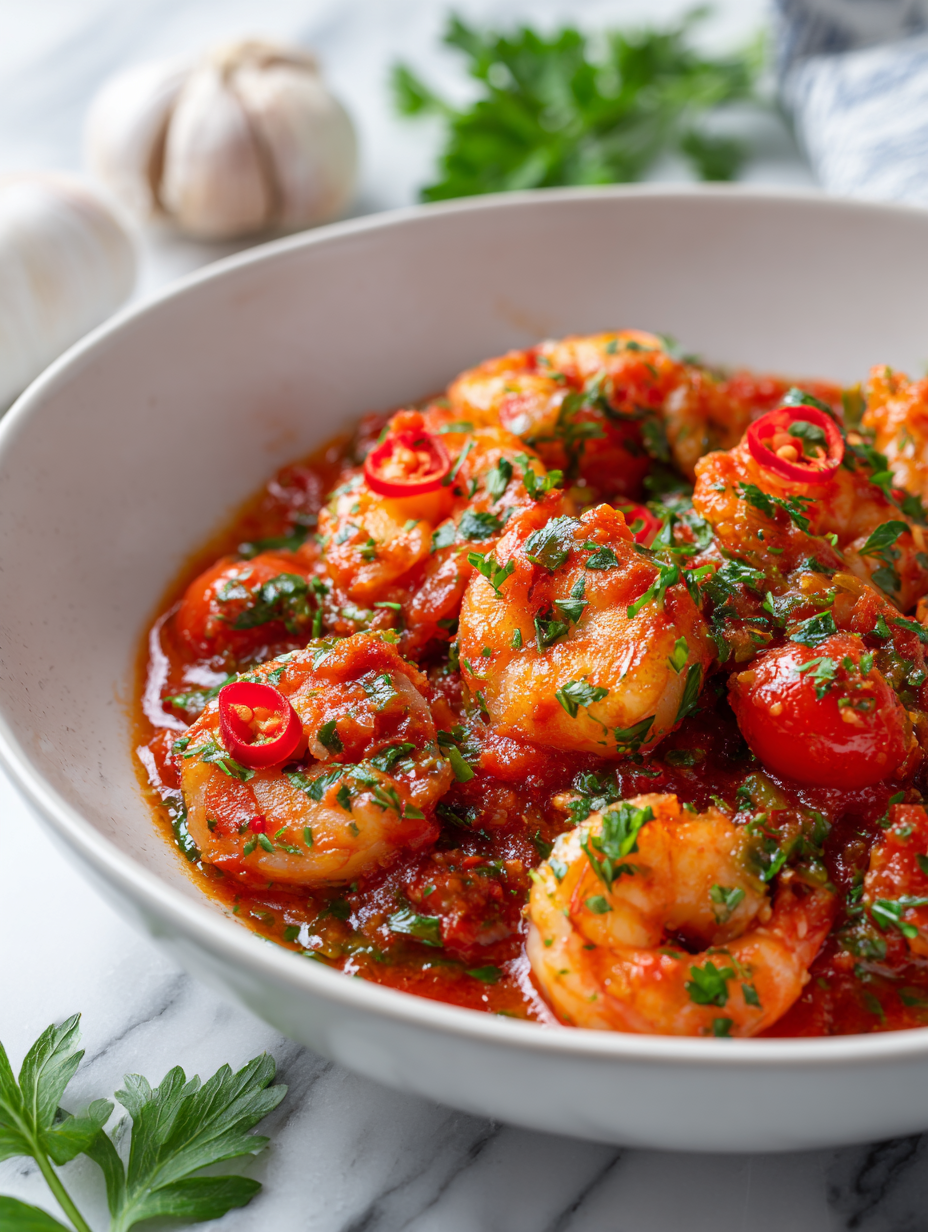
Shrimp Arrabbiata
Ingredients
Equipment
Method
- Heat a large skillet over medium heat and add the olive oil. When it shimmers and begins to smell fragrant, add the minced garlic. Sauté for about 30 seconds until fragrant and slightly golden.
- Sprinkle in the red chili flakes and stir for 15 seconds until they crackle and release their fiery aroma.
- Pour in the crushed tomatoes, stirring well to combine with the garlic and chili flakes. Bring the sauce to a gentle simmer, then reduce the heat and let it cook for about 10 minutes, stirring occasionally, until it thickens slightly and turns a vibrant red.
- While the sauce simmers, season the shrimp with salt and pepper. Heat a separate pan or adjust the same skillet, then add a little more oil if needed. Sear the shrimp over medium-high heat for 2-3 minutes per side until they turn pink, opaque, and develop a slight char at the edges.
- Gently add the cooked shrimp to the tomato sauce, tossing to coat evenly. Let everything cook together for another 2 minutes, allowing the flavors to meld and the shrimp to soak up that fiery, garlicky goodness.
- Finish by stirring in torn fresh basil leaves, releasing their bright aroma into the sauce. Turn off the heat and let it rest for a minute before serving.
- Serve the Shrimp Arrabbiata immediately over cooked pasta or with crusty bread, garnished with extra basil if desired. Enjoy the fiery, fragrant, and perfectly tender shrimp in this bold, comforting dish.
Pro tips for perfect Shrimp Arrabbiata
- Bolded mini-head: Use high heat briefly → Sear the shrimp quickly for a tender, slightly caramelized exterior.
- Bolded mini-head: Toast chili flakes in oil → Releases fiery aroma and enhances heat without bitterness.
- Bolded mini-head: Add tomatoes gradually → Prevent splatters and build flavor depth with controlled simmering.
- Bolded mini-head: Taste and adjust spice → Always sample sauce before serving to balance heat and acidity.
- Bolded mini-head: Finish with fresh basil → Adds fragrant brightness and a pop of herbal freshness right before serving.
- Bolded mini-head: Keep shrimp tender → Avoid overcooking by removing from heat as soon as they turn pink and opaque.
- Bolded mini-head: Use a wide skillet → Ensures even heat distribution and prevents overcrowding, which steams instead of sears.
Common mistakes and how to fix them
- FORGOT to adjust heat after adding tomatoes → Simmer gently to prevent burning.
- DUMPED the shrimp too early → Cook until just opaque for tender texture.
- OVER-TORCHED the garlic → Remove from heat once fragrant to avoid bitterness.
- UNDERESTIMATED chili flakes → Taste sauce and adjust spice before serving.
Quick fixes and pantry swaps
- When sauce is too thick, splash in warm water and stir gently.
- If shrimp turn rubbery, reduce cooking time and serve immediately.
- Splash a bit of lemon juice if sauce is too spicy or flat.
- Patch burnt sauce with a little extra canned tomatoes and simmer again.
- Shield delicate shrimp from overcooking by removing from heat early.
Prep, store, and reheat tips
- Prep your shrimp: peel and devein in advance, keep covered in fridge for up to 24 hours. Fresh shrimp will stay juicy, but avoid long storage as texture can degrade.
- Sauce can be made a day ahead: store in an airtight container in the fridge for up to 2 days. Reheat gently on low heat, stirring often until bubbling and fragrant—the aroma of garlic and chili will tell you it’s ready.
- Cooked shrimp: best enjoyed fresh, but can be stored separately in an airtight container for up to 24 hours. Reheat gently in the sauce or in a warm pan, watching for overcooking—shrimp turns rubbery if overdone.
- Reheating tips: heat in a skillet over low-medium until sauce shimmers and shrimp are warmed through. Check for a fragrant aroma and bubbling edges—don’t let it boil too hard or shrimp will toughen.
- Shelf life: sauce and cooked shrimp last about 1-2 days in the fridge. The flavors mellow slightly, but the heat and garlic will still wake up your senses upon reheating.
Top Questions About Shrimp Arrabbiata
1. How do I know when the shrimp are perfectly cooked?
Use large, raw, peeled shrimp for tender, juicy bites that cook quickly. They should turn pink and opaque when done.
2. Can I make this dish milder or spicier?
Adjust the chili flakes based on your heat preference. More for fiery, less for mild. Smell the oil crackle—that’s your heat signal.
3. Can I use fresh tomatoes instead of canned?
Use canned whole peeled tomatoes, crushed by hand, for the best flavor. Fresh tomatoes are too watery and dilute the sauce’s brightness.
4. How do I reheat leftovers without overcooking the shrimp?
Reheat gently in a skillet over low-medium heat, stirring often until the sauce shimmers and the aroma of garlic and chili fills the air.
5. What can I add to brighten up the dish?
Add a splash of lemon juice or white wine at the end for a bright, fresh note that balances the heat.
6. What is the best way to serve Shrimp Arrabbiata?
Serve immediately over pasta or crusty bread. The sauce is best hot, with the shrimp tender and the flavors lively.
7. What pan size works best for this recipe?
Use a wide skillet for even heat and to prevent overcrowding. This helps the shrimp sear properly and the sauce cook evenly.
8. Can I prepare this dish in advance?
Make the sauce a day ahead for deeper flavor. Store in the fridge for up to 2 days, then reheat gently until bubbling.
9. My sauce is too thick, what should I do?
If sauce gets too thick, splash in a little warm water or chicken broth and stir gently to loosen.
10. How do I avoid overcooking the shrimp?
Don’t overcook the shrimp; they should turn pink and slightly firm. Remove from heat as soon as they are opaque.
This shrimp arrabbiata is a reminder that simplicity in cooking can still deliver bold, fiery flavors. It’s a dish I turn to when I want immediate comfort with a punch of spice, especially during these chilly months. The way the shrimp soak up the spicy tomato sauce always feels like a tiny victory in my kitchen.
Sharing this with friends or just enjoying it solo makes me appreciate how a few humble ingredients can come together so quickly. It’s imperfect, lively, and just a little bit chaotic—and that’s what makes it real. Sometimes, that’s exactly what I need after a long day.