
This Shrimp Basil Pasta came about because I was craving something that felt lively and fresh, but still comforting enough for a weeknight dinner. I love how the bright aroma of fresh basil cuts through the richness of buttery shrimp, making each bite feel like a breath of garden air. It’s simple, but the flavors dance together in a way that always surprises me.
Honestly, I didn’t start with a plan—just a bunch of basil, a handful of shrimp, and a desire for something quick yet vibrant. The magic happens when you toss everything together just right, letting the basil’s herbal brightness marry with the sweet, tender shrimp. It’s one of those dishes that makes me feel like I’ve captured a little bit of summer, even on a chilly night.
Focusing on how fresh basil balances the sweetness of shrimp, creating a fragrant, almost herbal seafood pasta that feels like a garden in motion.
Garden Fresh Seafood
- Cooking this dish always reminds me of summer evenings spent outside, the smell of basil filling the air.
- I used to think quick pasta dinners lacked soul, but this one proves fresh herbs and good shrimp do all the heavy lifting.
- There’s a quiet pride in getting that perfect balance of garlic, lemon, and basil that makes each bite pop.
- Whenever I make this, I feel a rush of nostalgia for family dinners around a small, cluttered table.
- This recipe has saved me on busy weeknights—bright, satisfying, and ready in under 30 minutes.
The story behind this recipe
- This dish was inspired by a trip to a tiny coastal town where fresh seafood and herbs were everywhere. I remember wandering through a market, the scent of basil and shrimp mixing in the air, making my stomach rumble. When I got back home, I wanted to recreate that feeling—bright, herbaceous, and satisfying all at once.
- It’s a dish that feels like a snapshot of summer—simple ingredients, bold flavors, and a little bit of chaos in the kitchen. I often make it when I need a quick reminder that good food doesn’t need fuss, just fresh ingredients and a bit of attention.
- heading: ‘The story behind this recipe’
Trivia and historical roots
- This dish draws inspiration from seaside towns where fresh seafood and herbs are staples, blending coastal simplicity with vibrant flavor.
- The use of basil with seafood has roots in Mediterranean cooking, especially in regions like Italy and Greece, where herbs and fresh ingredients reign supreme.
- Shrimp and basil together evoke a sense of garden-to-table freshness, a pairing that became popular in contemporary quick-cook dishes over the last decade.
- Historically, pasta dishes with seafood were considered a luxurious comfort food, often made with what was locally available—shrimp, herbs, and pasta.
Ingredient breakdown: key components
- Shrimp: I prefer fresh, deveined shrimp with tails off—they cook quickly and stay juicy, giving that satisfying snap when you bite into them. Try to buy the ones that smell like the sea, not fishy at all.
- Basil: Fresh basil is everything here—its aroma alone brightens the dish. Gently bruise the leaves to release more oils, but add it off the heat so it keeps that vibrant, herbal punch.
- Garlic: I like plenty of garlic—minced finely so it crisps up slightly and infuses the oil. If you burn it, it turns bitter fast, so keep the heat moderate once it hits the pan.
- Olive Oil: Use good-quality extra virgin—it’s the base of the sauce’s flavor. I warm it just enough to shimmer, but avoid smoking it to keep that fresh, fruity note.
- Lemon: Brightens everything—don’t skip it. I zest first for extra zing, then squeeze just before serving to keep the citrus lively and fresh against the herbs and seafood.
- Pasta: I lean towards spaghetti or linguine—long, thin, and perfect for twirling. Cook it al dente, just shy of tender, so it holds up in the sauce without turning to mush.
- Red Pepper Flakes: A pinch adds a subtle heat—start small and taste, because a little goes a long way in balancing the herbal and seafood flavors.
Spotlight on key ingredients
Shrimp:
- I prefer fresh, deveined shrimp with tails off—they cook quickly and stay juicy, giving that satisfying snap when you bite into them. Try to buy the ones that smell like the sea, not fishy at all.
- Basil: Fresh basil is everything here—its aroma alone brightens the dish. Gently bruise the leaves to release more oils, but add it off the heat so it keeps that vibrant, herbal punch.
Basil:
- Fresh basil is everything here—its aroma alone brightens the dish. Gently bruise the leaves to release more oils, but add it off the heat so it keeps that vibrant, herbal punch.
- Its leaves are tender and fragrant, turning slightly darker and releasing a sweet, peppery aroma as they wilt just right in the heat.
Notes for ingredient swaps
- Seafood alternative: Use scallops or firm white fish instead of shrimp. They cook quickly and bring a different sweetness or mildness, but still pair well with basil.
- Herb swap: Cilantro or parsley can replace basil for a different herbal punch. Cilantro adds freshness; parsley offers a milder, grassy note.
- Oil choice: Avocado or grapeseed oil can stand in for olive oil. They have neutral flavors and higher smoke points, but won’t add that fruity aroma.
- Citrus: Lime juice can substitute lemon for a slightly different tartness. Use it fresh for brightness, but reduce quantity if you prefer less sharpness.
- Pasta: Gluten-free spaghetti or zucchini noodles work if you want a lighter or allergen-free version. Keep in mind, texture and flavor will shift.
- Garlic: Shallots or leeks can add depth if garlic is unavailable. Cook them gently to develop sweetness, but they lack that punch garlic has.
- Fresh herbs: Dried basil or oregano can replace fresh basil, but use less—dried herbs are more concentrated and can taste dull if overused.
Equipment & Tools
- Large skillet: Cook shrimp and basil quickly, allowing for even heat distribution.
- Pasta pot: Boil pasta efficiently and retain enough water for sauce adjustment.
- Slotted spoon: Remove shrimp without breaking the delicate pieces, and serve.
- Sharp knife: Prep garlic, basil, and lemon with precision and safety.
Step-by-step guide to Shrimp Basil Pasta
- Equipment & tools: Use a large skillet (30 cm or 12 inches) for even cooking, a pasta pot for boiling, a slotted spoon for shrimp, and a sharp knife for prep.
- Bring a big pot of salted water (1 tbsp salt) to a rolling boil at 100°C (212°F). Add pasta and cook until just al dente, about 8 minutes. Drain and set aside, saving a cup of pasta water.
- While pasta cooks, heat 2 tbsp olive oil over medium heat (around 160°C / 320°F) in your skillet. Add minced garlic, cook for 30 seconds until fragrant—avoid browning.
- Add shrimp (about 200g per serving), season lightly with salt and pepper. Cook for 2-3 minutes per side, until pink and opaque, with a slight curl. Check for a firm texture and a bright color.
- Remove shrimp and set aside. In the same pan, add a splash more oil if needed, then toss in chopped basil (about ¼ cup), stirring quickly for 15 seconds until fragrant but not wilted.
- Return shrimp to the pan, add cooked pasta, squeeze in lemon juice (about 1 tbsp), and toss everything together. Add reserved pasta water a tablespoon at a time to loosen sauce and coat noodles evenly.
- Cook for another minute, letting flavors meld. Taste and adjust salt or lemon juice as needed. The sauce should be bright, fragrant, and slightly glossy.
- Rest the pasta for 1-2 minutes off the heat, allowing flavors to settle. Plate immediately, garnishing with more basil if desired, and a drizzle of olive oil.
Let the pasta rest off heat for 1-2 minutes to settle flavors. Serve immediately, garnished with fresh basil and a drizzle of olive oil for extra aroma and shine.
How to Know It’s Done
- Shrimp are bright pink, firm, and slightly curled.
- Basil releases a fragrant aroma without wilting or browning.
- Pasta is al dente, with a slight bite and coated in sauce.
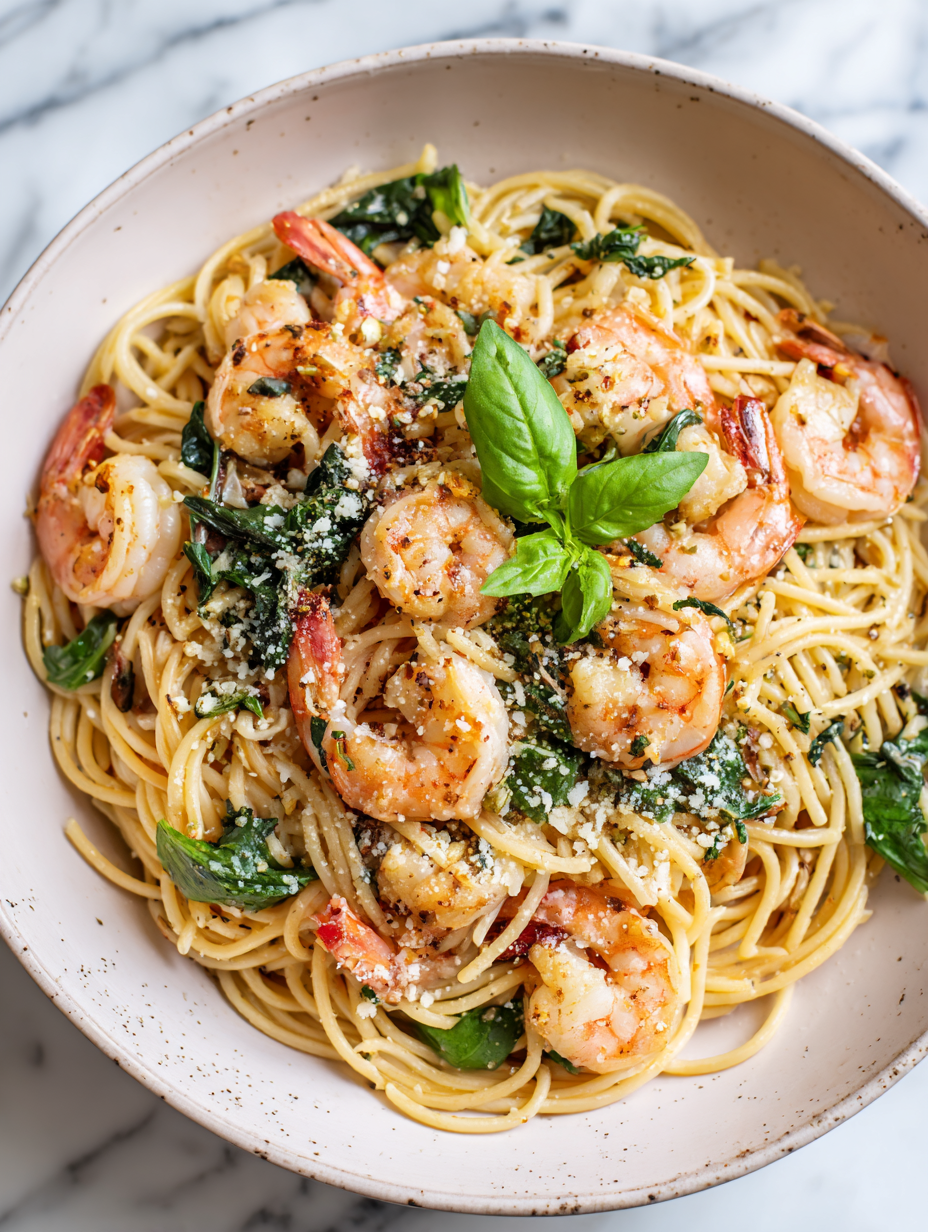
Shrimp Basil Pasta
Ingredients
Equipment
Method
- Bring a large pot of salted water to a rolling boil and cook the pasta until just shy of al dente, about 8 minutes. Drain, reserving a splash of pasta water, and set aside.
- While the pasta cooks, heat olive oil in a large skillet over medium heat. Add minced garlic and cook for about 30 seconds until fragrant, with a slight sizzle, but not browned.
- Add the shrimp to the skillet, season lightly with salt and pepper, and cook for 2-3 minutes per side until they turn bright pink, opaque, and slightly curled. Remove the shrimp with a slotted spoon and set aside.
- Immediately add the fresh basil leaves to the same skillet, gently bruising them with the back of a spoon or your fingers to release their aroma. Stir quickly for about 15 seconds until fragrant but not wilted.
- Return the cooked shrimp to the skillet, then add the drained pasta. Squeeze in the lemon juice and toss everything together until the pasta is coated and heated through, about 1 minute. If the sauce seems dry, add a splash of reserved pasta water to loosen it and help it cling to the noodles.
- Sprinkle red pepper flakes over the pasta, give it a final toss, and taste. Adjust seasoning with more salt, pepper, or lemon juice if needed. Serve immediately, garnished with additional basil if desired.
Pro tips for Shrimp Basil Pasta
- Gentle basil: Bruise the basil leaves in your palm before adding to release more herbal oils and aroma.
- Pan temperature: Keep the skillet at medium (around 160°C / 320°F) for shrimp to cook evenly without overcooking.
- Garlic caution: Add garlic early but watch closely—browning turns bitter quickly, so keep the heat moderate.
- Pasta water: Use a splash of reserved pasta water to loosen the sauce and help it cling better to the noodles.
- Shrimp timing: Cook shrimp until they turn bright pink and are just opaque—overcooking makes them tough.
- Lemon zest: Zest the lemon first, then squeeze for maximum brightness—adding zest early can dull the flavor.
- Final toss: Mix everything off heat for the basil to stay vibrant and prevent it from wilting into dullness.
Common mistakes and how to fix them
- FORGOT to adjust heat after adding shrimp → cause overcooking, fix by cooking in batches if needed.
- DUMPED all basil at once → lose aroma, fix by adding in stages, saving some for garnish.
- OVER-TORCHED garlic → bitterness, fix by lowering heat immediately once fragrant.
- MISSED seasoning at end → bland dish, fix by tasting and adding salt or lemon as needed.
Quick fixes and pantry swaps
- When sauce shimmers, splash in a bit more pasta water to loosen it.
- If shrimp turn rubbery, reduce heat and cook in smaller batches.
- Splash some lemon juice if basil aroma fades during cooking.
- Patch over-salted pasta with a little more water or lemon zest.
- Shield basil from direct heat to keep its vibrant green and fresh scent.
Prep, store, and reheat tips
- Prep the shrimp: peel and devein ahead, kept in an airtight container in the fridge for up to 24 hours, until ready to cook—look for firm texture and a fresh sea smell.
- Wash and dry basil leaves thoroughly; store in a damp paper towel inside a zip-top bag for 1-2 days, to preserve their fragrant, vibrant aroma.
- Cook pasta until just shy of al dente, then toss with a little olive oil, cool, and store in an airtight container for up to 1 day—pasta can cling and dry out if left longer.
- Make the garlic and herb prep: mince garlic, bruise basil, and zest lemon in advance; keep in separate small containers in the fridge for up to a day, to save time during assembly.
- Reheat leftovers gently in a skillet over low heat, adding a splash of pasta water or olive oil to revive the sauce and keep the shrimp tender—watch for aroma and avoid over-drying.
- Shelf life: cooked pasta and shrimp are best enjoyed within 24 hours, as flavors fade and texture dulls—reheat until steaming and fragrant, with shrimp still juicy.
Top questions about Shrimp Basil Pasta
1. Can I use frozen shrimp?
Fresh shrimp gives a juicier, tender bite and a sweeter flavor, especially if you buy them the day you cook.
2. How do I thaw shrimp quickly?
Yes, but thaw them completely in the fridge overnight and pat dry to avoid excess water in the pan.
3. When should I add basil?
Add basil at the very end of cooking to keep its bright, herbal aroma alive, not wilted or dull.
4. How do I know when the pasta is perfect?
Cook the pasta until just shy of al dente—about 1-2 minutes less than package instructions—to prevent mushiness when tossed with sauce.
5. Can I substitute another oil?
Use good-quality extra virgin olive oil for a fruity, fresh base that enhances the seafood and herbs.
6. Can I skip lemon?
Yes, lemon zest and juice brighten the dish, but if you don’t have lemon, lime works well as a fresh alternative.
7. How do I prevent overcooking shrimp?
If you overcook the shrimp, they become rubbery. Remove them from heat as soon as they turn pink and opaque.
8. Should I save pasta water?
Adding reserved pasta water helps loosen the sauce and helps it cling to the noodles better, giving a silky texture.
9. What size skillet works best?
Use a large skillet to give the shrimp space to cook evenly and basil room to release aroma without wilting.
10. How long can I keep leftovers?
Leftovers can be stored in the fridge for up to 24 hours. Reheat gently in a skillet with a splash of water or oil.
This dish feels like a little burst of summer, no matter the season. The aroma of basil and the tender shrimp make each bite memorable, even on busy weeknights.
It’s honest, straightforward cooking—no fuss, just fresh ingredients coming together in a way that’s satisfying and real. Sometimes, simplicity really does shine.