
After long, chaotic days, I find myself craving something rich and soothing, like this shrimp cream sauce pasta. It’s my little ritual to slow down, stir a pot, and let the creamy, garlicky aroma fill the kitchen. Making this dish feels like a quiet act of self-care, a small pause in the rush.
What makes this recipe special isn’t just the flavors—it’s how it turns a simple pasta into a comforting retreat. The tender shrimp, coated in a silky, lemon-bright sauce, reminds me that sometimes, the simplest meals bring the biggest moments of peace. It’s honestly more about the ritual than the recipe, a way to carve out calm amid the noise.
How making this creamy shrimp pasta became my small act of self-care after hectic days, turning a simple meal into a moment of calm and comfort.
Turning Simplicity into Comfort
- This dish reminds me of summer evenings by the coast, where the aroma of shrimp mingles with salt air.
- I feel a quiet pride when I master the perfect creamy sauce without it splitting or becoming too thick.
- Cooking this pasta is my small act of rebellion against takeout—it’s quick, satisfying, and feels like an accomplishment.
- There’s a nostalgic joy in watching the shrimp turn pink and plump, signaling that dinner is almost ready.
The story behind this recipe
- This recipe started as a way to use up a bag of frozen shrimp I had lingering in the freezer. One night, I threw it all together with some cream and garlic, not expecting much. But the aroma that filled the kitchen—garlicky, slightly smoky, with a hint of lemon—made me pause. It’s become my go-to when I need comfort on a busy night.
- Cooking the shrimp just right, so they stay tender and juicy, became a little quest of mine. I love how the creamy sauce transforms simple ingredients into something that feels indulgent without fuss. It’s a reminder that sometimes, the best dishes come from improvisation and a bit of patience.
- heading: The story behind this recipe
Historical and Cultural Tidbits
- This creamy shrimp pasta has roots in Italian coastal cuisine, where fresh seafood and simple sauces reign supreme.
- The combination of shrimp and cream likely evolved from rustic seaside recipes that prioritized quick, flavorful meals for fishermen after long days.
- In some regions, this dish is a celebration of the harvest season, using locally caught shrimp and seasonal herbs to enhance flavor.
- The use of lemon and garlic in this sauce pays homage to Mediterranean flavors, emphasizing brightness and freshness.
- Despite its humble origins, this dish has become a comfort food classic in many kitchens worldwide, thanks to its quick assembly and rich taste.
Ingredient breakdown
- Shrimp: I love using peeled, deveined shrimp that still have that slight briny scent—gives the sauce a sweet, oceanic depth. Swap for scallops if you want a richer, sweeter bite.
- Heavy cream: I prefer full-fat for that luscious, silky texture that clings to pasta. Light cream can work, but you’ll miss that velvety richness. Keep it chilled before adding.
- Garlic: Fresh garlic is my go-to, its pungency mellowing into sweet, fragrant notes as it cooks—don’t skimp, it’s the flavor foundation. Use a microplane for fine, even bits.
- Lemon juice: Brightens everything—juice from a fresh lemon gives it that zingy, citrus pop that cuts through the richness. Skip if you prefer milder, cream-forward sauce.
- Parmesan: I always use freshly grated Parmesan for that sharp, nutty umami. Pecorino can add a saltier twist if you like it bold. Stir in at the end for best melt.
- Olive oil: A good splash of fruity, grassy olive oil at the start helps build flavor and prevents sticking. Use a high-quality oil for that extra layer of scent and taste.
- Fresh herbs: Parsley or basil brightens the dish—add just before serving to keep their vibrant color and fresh aroma. Dried herbs won’t deliver the same lively punch.
Spotlight on Key Ingredients
Shrimp:
- I prefer peeled, deveined shrimp with a slight briny scent—adds that oceanic sweetness. Swap for scallops for a richer, tender bite.
- Heavy cream: Full-fat gives the sauce its silky, clingy texture. Light cream will work but won’t feel as luscious. Keep it cold before adding.
Lemon & Parmesan:
- Lemon juice: Brightens the sauce with a zingy, citrusy burst that cuts through the richness. Freshly squeezed is best for that vivid, fresh flavor.
- Parmesan: Freshly grated Parmesan melts smoothly into the sauce, adding a sharp, nutty umami. Pecorino can bring a saltier note if you like bold flavors.
Notes for ingredient swaps
- Dairy-Free: Coconut cream can stand in for heavy cream, offering a richer, slightly sweeter flavor and a hint of coconut aroma—good for dairy allergies or a different taste profile.
- Gluten-Free: Use gluten-free pasta or zucchini noodles to keep it light and suitable for gluten sensitivities, though texture may differ slightly.
- Seafood Swap: Scallops or firm white fish like cod can replace shrimp, bringing a different oceanic flavor—just adjust cooking time to avoid overcooking.
- Lemon Alternatives: Lime juice or a splash of vinegar can brighten the sauce if lemon isn’t available—expect a slightly different tang but still refreshing.
- Herb Variations: Fresh dill or tarragon can replace parsley or basil, adding unique aromatic qualities—add at the end to preserve their brightness.
Equipment & Tools
- Large skillet: For searing shrimp and simmering sauce.
- Wooden spoon: Stir ingredients without scratching the pan.
- Microplane: Finely grate garlic for even flavor release.
- Tongs: Flip shrimp and handle hot ingredients.
- Measuring cup: Measure lemon juice and liquids accurately.
Step-by-step guide to shrimp pasta
- Equipment & Tools: Use a large, heavy-bottomed skillet—it needs to hold heat well for searing shrimp and simmering sauce. Have a wooden spoon for stirring, a microplane for garlic, tongs for flipping, and a measuring cup for lemon juice ready.
- Bring a large pot of salted water to a boil—around 100°C / 212°F. Cook pasta until al dente, about 8 minutes. Drain, save a cup of pasta water, and set aside.
- While pasta cooks, heat the skillet over medium-high heat—about 180°C / 356°F. Add a splash of olive oil. When shimmering, add shrimp, laying them flat. Sear for 2 minutes each side until pink and slightly golden. Remove and set aside.
- In the same skillet, lower heat to medium; add more olive oil if needed. Toss in finely grated garlic, cook for 30 seconds until fragrant and slightly golden. Be careful not to burn it—smell should turn sweet and aromatic.
- Pour in heavy cream—about 1 cup (240 ml). Bring to a gentle simmer, stirring occasionally. Let it thicken slightly, about 3-4 minutes, until it coats the back of a spoon. The sauce should be velvety and slightly bubbling.
- Add lemon juice—about 1 tablespoon—and grated Parmesan—about 1/2 cup. Stir until cheese melts into the sauce. If sauce is too thick, splash in reserved pasta water a tablespoon at a time until it’s velvety but loose. The sauce should shimmer and be bright.
- Return shrimp to the skillet, nestling them into the sauce. Cook for another minute to reheat and meld flavors. Check for doneness: shrimp should be tender, sauce creamy and smooth, and aroma garlicky with lemon brightness. If sauce splits or shrinks, lower heat and add a splash more pasta water.
- Toss in cooked pasta, stirring well to coat. Adjust seasoning with salt or more lemon juice if needed. Let it sit off heat for a minute for flavors to meld. The pasta should be glossy and hot, with a fragrant, creamy coating.
- Resting & Finishing: Serve immediately, garnished with chopped parsley or basil. Spoon into warm bowls, ensuring each portion has plenty of sauce and shrimp. Drizzle with a little olive oil for shine.
- Checkpoints & How to Know It’s Done: The shrimp should be plump and opaque, sauce velvety and shimmering, pasta hot and evenly coated. The aroma should be inviting—garlic, lemon, and cheese are balanced.
Serve immediately while hot. Garnish with fresh herbs and a drizzle of olive oil. Toss gently to distribute sauce evenly across the pasta and shrimp. Enjoy the fragrant, creamy mixture straight from the skillet.
How to Know It’s Done
- Shrimp are pink and firm, with no grayish translucency.
- Sauce coats the pasta smoothly, with a glossy finish.
- Aroma of garlic and lemon is bright and inviting.
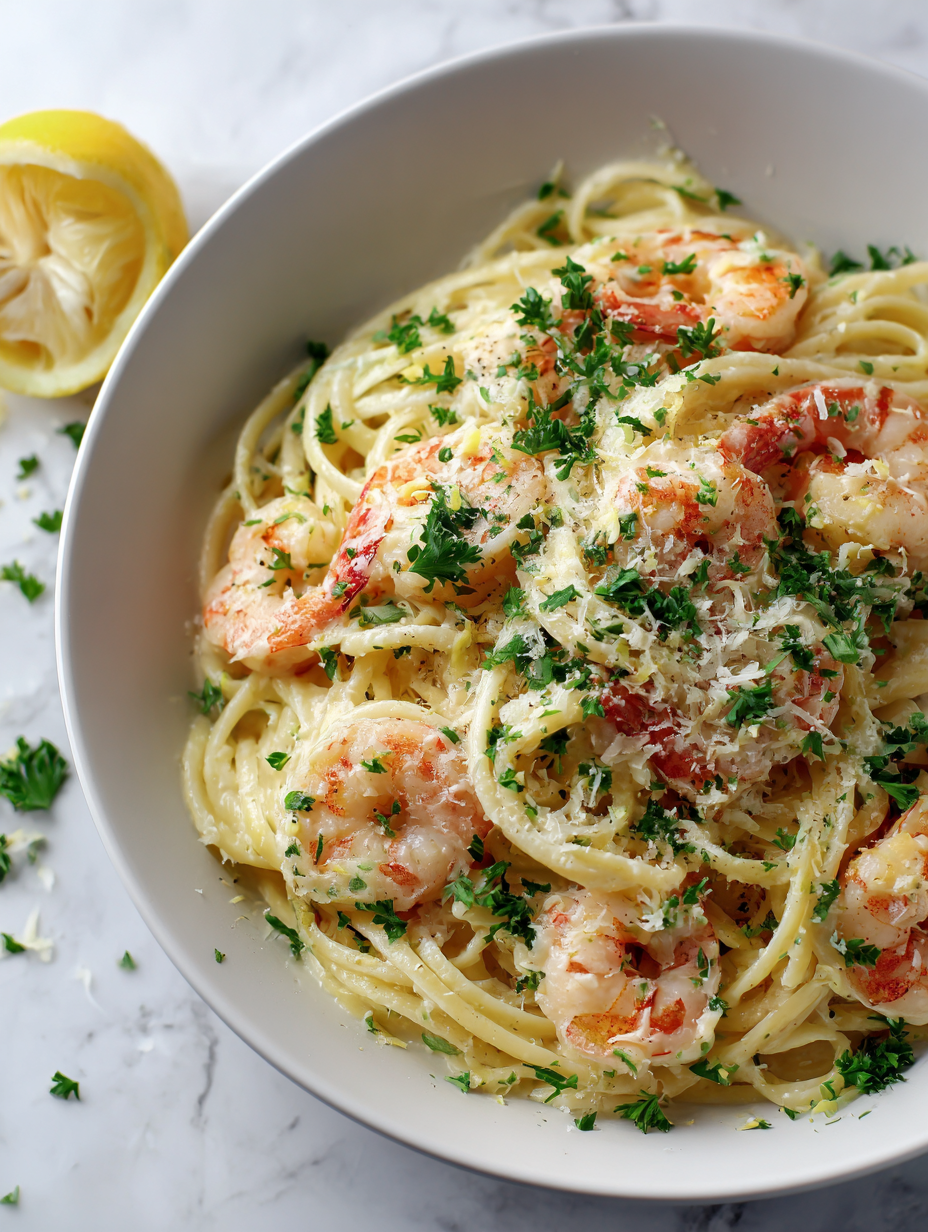
Creamy Garlic Shrimp Pasta
Ingredients
Equipment
Method
- Cook the pasta in salted boiling water until al dente, about 8 minutes. Drain and set aside, reserving a little pasta water.
- While the pasta cooks, heat a large skillet over medium-high heat and add a splash of olive oil. Once shimmering, add the shrimp in a single layer, searing for about 2 minutes per side until they turn pink and slightly golden. Remove the shrimp from the pan and set aside.
- Lower the heat to medium, then add a bit more olive oil if needed. Toss in the microplaned garlic and cook for about 30 seconds until fragrant and golden, making sure not to burn it.
- Pour in the heavy cream, stirring gently with a wooden spoon. Bring it to a gentle simmer, and let it thicken slightly, about 3-4 minutes, until it coats the back of the spoon with a velvety texture.
- Add the lemon juice and grated Parmesan cheese, stirring until the cheese melts and the sauce brightens. If it becomes too thick, add a splash of the reserved pasta water to loosen it into a silky consistency.
- Return the cooked shrimp to the skillet, nestling them into the sauce. Cook for another minute to reheat and meld flavors, ensuring the shrimp stay tender and pink.
- Add the drained pasta to the skillet, tossing gently to coat everything evenly with the creamy sauce. Adjust seasoning with salt, more lemon juice, or pasta water if needed.
- Remove the skillet from heat, then sprinkle chopped parsley or basil over the top for a fresh burst of flavor and color.
- Divide the creamy shrimp pasta into warm bowls, drizzle with a little olive oil, and serve immediately while hot and fragrant.
Pro tips for perfect shrimp pasta
- Use a high smoke point oil like avocado or refined olive oil to prevent burning during searing.
- Sear shrimp in a hot pan until they turn pink and slightly golden—about 2 minutes per side—for optimal juiciness.
- When cooking garlic, add it after the oil heats up and cook just until fragrant, about 30 seconds—avoid burning to keep it sweet.
- Slowly add pasta water to the sauce to loosen it without diluting flavor—stir until silky and coats the pasta.
- Finish the sauce with a squeeze of lemon and fresh herbs off heat to preserve bright flavors and color.
- Keep an eye on the sauce as it simmers; it should thicken slightly and shimmer—remove from heat before it splits.
- Rest the pasta for a minute after mixing to allow flavors to meld and sauce to set slightly for easier serving.
Common mistakes and how to fix them
- FORGOT to adjust heat after searing shrimp → Lower heat to prevent overcooking.
- DUMPED all pasta water at once → Save some for adjusting sauce consistency.
- OVER-TORCHED the garlic → Cook until fragrant and golden, not burnt.
- MISSED the sauce thickening stage → Let it simmer until velvety and coats the back of a spoon.
Quick fixes and pantry swaps
- When sauce splits, splash in a bit of pasta water to re-emulsify.
- If shrimp are overcooked, quickly toss in ice water to halt cooking and keep them tender.
- DUMPED all pasta water at once? Save a few tablespoons to loosen the sauce if needed.
- Splash a little lemon juice or vinegar if the sauce tastes flat or dull.
- Patch a too-thick sauce by stirring in warm, reserved pasta water until silky.
Make-Ahead & Storage Tips
- Prep the shrimp: Peel and devein ahead of time, then keep covered in the fridge for up to 24 hours. The fresh briny smell will intensify slightly, so smell check before cooking.
- Make the sauce: Prepare the cream, garlic, and lemon mixture a day in advance. Store in an airtight container for up to 2 days. The sauce may thicken slightly; stir well before reheating.
- Cook the pasta: Boil and drain the pasta until just al dente. Toss with a little oil to prevent sticking, then store in an airtight container for up to 1 day. Reheat in boiling water briefly or microwave until hot, noting the texture may soften.
- Reheating: Gently warm the sauce in a skillet over low heat, stirring often. Add a splash of pasta water or cream if it thickens or separates. Reheat shrimp separately if needed, then combine just before serving for the best texture.
- Shelf life: Keep prepped ingredients refrigerated and use within 24-48 hours for optimal flavor and safety. The sauce’s richness holds well, but the shrimp is best fresh for texture and flavor.
Top questions about shrimp cream pasta
1. Can I use frozen shrimp?
Use peeled, deveined shrimp for convenience and a cleaner look. They cook quickly, about 2-3 minutes per side, until pink and opaque.
2. Can I make this ahead?
Yes, but thaw them overnight in the fridge or run under cold water. Pat dry thoroughly before cooking to avoid excess water in the pan.
3. How do I reheat leftovers?
You can prepare the sauce and cook the pasta in advance. Reheat gently in a skillet, adding a splash of pasta water to loosen the sauce.
4. Can I substitute the cream?
Use full-fat heavy cream for that rich, silky texture. Light cream or half-and-half will make the sauce thinner and less luscious.
5. Can I skip the lemon?
Add fresh lemon juice at the end to brighten the sauce. For a milder taste, reduce the amount or skip if you prefer less citrus.
6. How do I know when shrimp are done?
Overcooking shrimp makes them tough and rubbery. Cook until just pink and firm, about 2 minutes per side, then remove from heat.
7. Can I use different cheese?
Stir in freshly grated Parmesan off the heat for the best melt and flavor. Pecorino Romano can add a saltier, sharper note if desired.
8. What equipment do I need?
Use a large, heavy skillet to ensure even searing and prevent sticking. A wooden spoon helps stir without scratching the pan.
9. The sauce is too thick, what now?
If the sauce thickens too much, splash in reserved pasta water a little at a time until silky and smooth.
10. Can I substitute the herbs?
Yes, you can swap basil or dill for parsley. Each brings a unique aroma—add herbs just before serving to keep their freshness.
This dish is a reminder that comfort can be simple and quick, yet deeply satisfying. The tender shrimp and creamy sauce come together in a way that feels indulgent but effortless. It’s a small act of self-care, turning a busy night into a moment of calm.
Sharing it with someone or savoring it alone—either way, it’s about the quiet joy of good food and familiar flavors. Sometimes, the most unassuming ingredients make the most memorable meals. And in those moments, I remember why I love cooking—pure and uncomplicated.