
This shrimp garlic pasta is my go-to for those nights when I want something quick but full of flavor. It’s messy, it’s loud, and it’s comforting in a way that makes the chaos of a busy kitchen feel just right. I’ve lost count of how many times this dish has saved me when I needed something hearty, honest, and done in under 30 minutes.
What makes this dish special isn’t just the shrimp or the garlic—it’s how everything comes together in that imperfect, slightly chaotic way. The sizzling shrimp, the fragrant garlic, and the way the pasta soaks up every bit of flavor—these small moments remind me why I love cooking for myself or friends. It’s honest food, made with a little bit of chaos and a lot of love.
This recipe is inspired by the chaotic, joyful mess of family dinners where everyone piles into the kitchen, shouting over each other, and somehow, amidst the laughter and clattering pots, this simple shrimp garlic pasta comes together. It’s about capturing that imperfect, warm, slightly loud moment of togetherness, where the aroma of garlic and sizzling shrimp fills the air and makes everyone feel at home.
Family Chaos and Garlic Smells
- Cooking this dish always takes me back to lively family dinners, where laughter and garlic fills the air.
- There’s a quiet pride in perfecting that caramelized shrimp crunch and fragrant, buttery garlic sauce.
- I love how this recipe turned into my comfort food, especially on nights when I need a quick, satisfying fix.
- The chaos of boiling pasta and sizzling shrimp somehow always makes me feel more connected to the kitchen.
- Every time I make it, I’m reminded that simple ingredients, treated with care, create something truly special.
The story behind this recipe
- This dish came from a night when I had no plan, just a handful of shrimp, some garlic, and a craving for something both simple and satisfying. I remember the smell of garlic filling the tiny kitchen, the way the shrimp sizzled and turned a perfect pink, and how the pasta soaked it all up like a sponge. It’s funny how some of the best meals are born from improvisation and a bit of chaos.
- Every time I make this, I think about those late nights when I needed comfort fast but didn’t want to compromise on flavor. It’s become a staple because it’s honest, fast, and full of that irresistible aroma of garlic and seafood. It reminds me that good food doesn’t have to be complicated, just honest and executed with a little bit of love and a lot of garlic.
- heading: ‘The story behind this recipe’
Historical and Cultural Tidbits
- This dish has roots in Mediterranean coastal towns where fresh seafood and garlic are staples of everyday cooking.
- The combination of shrimp and garlic became popular in Italy and France during the 20th century, reflecting a desire for quick, flavorful meals.
- Historically, garlic was considered a sacred ingredient, believed to ward off evil spirits, making it a natural choice for hearty, comforting dishes.
- The simplicity of shrimp garlic pasta echoes traditional peasant dishes, where humble ingredients were transformed into something special with technique and love.
- In many households, this dish is a go-to for busy weeknights, embodying the idea that good food can be quick, honest, and deeply satisfying.
Key Ingredients and Tips
- Shrimp: Fresh, pink shrimp make all the difference; I look for ones that are firm and smell like the ocean. Skip pre-cooked—raw shrimp absorb garlic and flavor better.
- Garlic: I love smashing and finely chopping garlic to release that pungent aroma; avoid burning it, or it turns bitter. Use fresh cloves for brightness in every bite.
- Pasta: I prefer linguine or spaghetti—something that catches the sauce well. Always salt the water generously; it’s the only way pasta gets flavorful.
- Olive oil: Use good-quality extra virgin for that fruity, rich base. Too cheap, and it loses its punch; too much, and it masks the garlic and shrimp.
- Lemon: Brightens everything with a quick squeeze—don’t skip it. The zest adds a fragrant, zingy top note that lifts the whole dish.
- Red pepper flakes: A pinch gives a subtle heat—if you like it fiery, go a little heavier. It’s about balance, not heat for heat’s sake.
- Parsley: Fresh chopped parsley adds a pop of color and freshness. Add it at the end — it keeps that vibrant, grassy note alive.
Spotlight on key ingredients
Shrimp:
- Fresh, pink shrimp make all the difference; I look for ones that are firm and smell like the ocean. Skip pre-cooked—raw shrimp absorb garlic and flavor better.
- Garlic: I love smashing and finely chopping garlic to release that pungent aroma; avoid burning it, or it turns bitter. Use fresh cloves for brightness in every bite.
Garlic & Oil:
- Garlic: The key to that fragrant, punchy flavor. It behaves differently when minced versus sliced—minced releases more aroma, slices give a milder, sweeter note. Watch it carefully while sautéing; it can go from perfect to bitter quickly.
- Olive oil: The foundation of flavor—use good-quality extra virgin. It should shimmer and smell fruity when heated; cheap oil can turn flat or greasy, masking the garlic and shrimp’s brightness.
Notes for ingredient swaps
- Seafood Swap: Frozen shrimp work in a pinch, just defrost thoroughly and pat dry—still sweet and tender. Fresh is best for the brightest flavor.
- Garlic Alternatives: Roasted garlic adds a mellow, sweeter note—use about half the amount. Dried garlic powder can stand in, but lose some pungency.
- Pasta Choices: Whole wheat or gluten-free varieties can replace traditional spaghetti—expect a nuttier flavor or different texture, but still delicious.
- Oil Swap: Avocado oil gives a milder, buttery finish—if you don’t have olive oil, it won’t compromise the flavor much.
- Citrus Substitute: Lime juice can replace lemon for a slightly different brightness—adds a more tropical vibe, but keeps that zing.
- Heat Adjustment: If you love spice, bump up the red pepper flakes or add a dash of hot sauce—your tongue will thank you.
- Herb Switch: Fresh basil or cilantro can replace parsley—each brings a vibrant, fresh aroma, though with a different flavor profile.
Equipment & Tools
- Large deep skillet: For cooking shrimp and pasta together evenly
- Colander: To drain pasta efficiently
- Sharp knife: For prepping garlic and shrimp
- Tongs: To toss pasta and handle shrimp
Step-by-step guide to shrimp garlic pasta
- Equipment & Tools: Use a large, deep skillet (about 30cm/12in) for even heat and ample space. Have a colander for draining pasta, a sharp knife for garlic, and tongs for shrimp and pasta.
- Boil water: Fill a large pot with 4 liters (about 1 gallon) water. Salt generously—think like seawater. Bring to a rolling boil at 100°C (212°F).
- Cook pasta: Add 400g (14oz) of spaghetti or linguine. Cook until just al dente—about 8 minutes. Stir occasionally, and taste for firmness. Drain, saving about ½ cup of pasta water.
- Prep shrimp: While pasta cooks, peel and devein 300g (10oz) of shrimp if not prepped. Pat dry with paper towels—moisture is the enemy of perfect searing.
- Sauté garlic: In the skillet over medium heat (about 160°C/320°F), heat 2 tbsp olive oil. Add 4 minced garlic cloves. Sauté until fragrant—about 30 seconds—avoid burning it, or it turns bitter.
- Cook shrimp: Push garlic aside. Add shrimp in a single layer. Cook for 2-3 minutes per side, until pink and opaque, with a slight char on edges. Shake the pan for even cooking. If shrimp release too much water, increase heat slightly.
- Combine pasta & sauce: Add drained pasta to the skillet. Toss to coat in garlic oil. Pour in ¼ cup reserved pasta water to loosen. Squeeze in lemon juice (from 1 lemon) and sprinkle red pepper flakes to taste.
- Finish & plate: Toss in chopped parsley, check seasoning—salt or lemon as needed. Rest for 1 minute. Serve immediately, garnished with extra parsley or lemon wedges if desired.
Serve immediately onto warm plates. Garnish with extra parsley and lemon wedges. Rest for a minute to let flavors meld. Enjoy hot, with a slice of crusty bread if you like.
How to Know It’s Done
- Shrimp are bright pink, firm, and slightly charred on edges.
- Garlic is fragrant and lightly golden, not burnt.
- Pasta is al dente, with a slight bite, coated evenly and glossy.
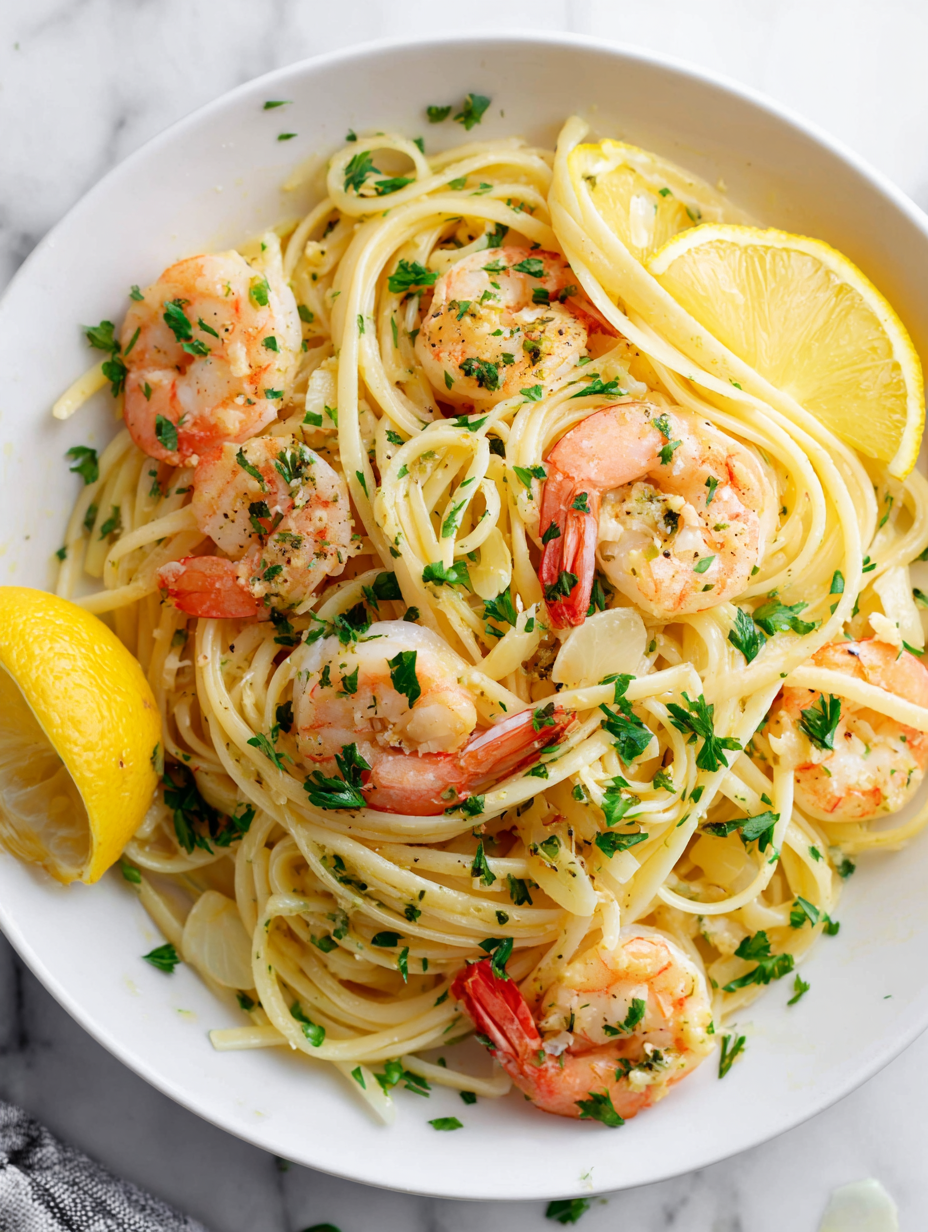
Shrimp Garlic Pasta
Ingredients
Equipment
Method
- Bring a large pot of water to a rolling boil, adding lots of salt to make it taste like seawater. Once boiling, add the pasta and cook until just al dente, about 8 minutes. Drain and set aside, saving about ½ cup of the pasta water.
- While the pasta cooks, peel and devein the shrimp if not already prepped. Pat them dry with paper towels to remove excess moisture, which helps them sear better.
- Heat a large deep skillet over medium heat until hot, then add 2 tablespoons of good-quality olive oil. Once shimmering, add the minced garlic and sauté for about 30 seconds until fragrant and lightly golden, releasing a warm, pungent aroma.400 g spaghetti or linguine
- Push the garlic to one side of the pan and add the shrimp in a single layer. Cook for about 2-3 minutes on each side until they turn pink, opaque, and develop a slight char on the edges. Shake the pan gently to promote even searing.400 g spaghetti or linguine
- Add the drained pasta directly into the skillet with the shrimp and garlic. Toss everything together to coat the pasta in the fragrant garlic oil, allowing the flavors to meld for about a minute.
- Pour in about ¼ cup of the reserved pasta water, which helps loosen the sauce and adds a silky texture. Squeeze the juice of half a lemon over the mixture, and sprinkle red pepper flakes to taste. Toss again to combine evenly.400 g spaghetti or linguine
- Remove the skillet from heat and stir in the chopped parsley. Taste and adjust seasoning with a little salt or more lemon juice if desired. The dish should be glossy, fragrant, and bursting with aroma.400 g spaghetti or linguine
- Serve immediately on warm plates, garnished with extra parsley or lemon wedges if you like. The pasta should be hot, shiny, and coated in a flavorful garlic oil, with tender shrimp and fresh herbs ready to enjoy.
Pro tips for perfect shrimp garlic pasta
- Bolded garlic: Finely chop or crush for maximum aroma release, but watch it so it doesn’t burn.
- Bolded shrimp: Sear in a hot pan until pink and slightly charred—this gives depth to the flavor.
- Bolded pasta water: Save a splash when draining—use it to loosen the sauce and add saltiness.
- Bolded oil: Use a good-quality extra virgin olive oil; it adds a fruity richness that elevates the dish.
- Bolded red pepper flakes: Add gradually and taste—build heat without overpowering the garlic and shrimp.
- Bolded parsley: Chop fresh and sprinkle at the end—this keeps its bright, grassy note lively and fresh.
Common mistakes and how to fix them
- FORGOT to shake pan: shrimp stick and overcook. Fix: Keep pan moving for even searing.
- DUMPED too much oil: greasy dish. Fix: Use just enough to coat the pan lightly.
- OVER-TORCHED garlic: bitter flavor. Fix: Sauté garlic until fragrant, not browned.
- SKIPPED reserving pasta water: dry sauce. Fix: Save pasta water for perfect consistency.
Fast Fixes & Pantry Swaps
- When shrimp stick, splash a little water in the pan to loosen them quickly.
- If garlic burns and turns bitter, immediately remove from heat and add a splash of lemon juice.
- DUMPED too much oil? Pat shrimp dry before cooking or use less oil next time.
- When pasta clumps, toss with a bit of hot pasta water to loosen the sauce instantly.
- Splash a squeeze of lemon on overcooked shrimp for a fresh, bright flavor rescue.
Prep, store, and reheat tips
- Peel and devein the shrimp ahead of time; keep refrigerated in an airtight container for up to 24 hours. It saves time and keeps the seafood fresh.
- Minced garlic can be prepared a day in advance; store in a small jar in the fridge, but only add to the dish just before cooking to keep it pungent.
- Cook the pasta al dente, drain, and toss with a teaspoon of olive oil to prevent sticking. Store in a sealed container for up to 2 days in the fridge.
- Refrigerated shrimp and pasta will lose some vibrancy and texture over time. Reheat gently to preserve moisture and flavor.
- To reheat, toss the pasta and shrimp in a hot skillet with a splash of olive oil or reserved pasta water. Keep an eye on the garlic—avoid burning or overcooking it during reheating.
Top questions about shrimp garlic pasta
1. Can I use pre-cooked shrimp?
Use raw shrimp for better absorption of garlic flavor and a fresher taste. Pre-cooked shrimp can be rubbery and less flavorful.
2. Can I make this with pre-cooked shrimp?
Yes, but add it at the end just to warm through to avoid overcooking and losing texture.
3. How long do I cook the pasta?
Cook the pasta until just al dente, about 8 minutes. Overcooked pasta turns mushy and clings to the pan.
4. How do I know when garlic is done?
Sauté garlic until fragrant and lightly golden—about 30 seconds. Burned garlic turns bitter and ruins the dish.
5. What temperature should the pan be?
Use a hot pan (around 160°C/320°F) to sear the shrimp quickly, getting that perfect pink and slight char.
6. Why save pasta water?
Save about ½ cup of pasta water before draining. It helps loosen the sauce and adds flavor and silkiness.
7. When should I add parsley?
Fresh parsley adds brightness and freshness. Add at the end to keep its vibrant flavor and color.
8. How spicy should it be?
Adjust red pepper flakes based on your heat preference. Start with a pinch and build up if you like it spicy.
9. Can I use a different oil?
Use good-quality extra virgin olive oil for a fruity, rich flavor. Cheaper oils may taste flat or greasy.
10. Can I make it ahead?
Serve immediately after tossing everything together. The dish tastes best hot and fresh, with the garlic aroma filling the air.
Cooking this dish always brings back the noise and warmth of family dinners, where garlic and laughter fill the air. It’s honest, simple, and a reminder that good food doesn’t need to be complicated or perfect.
In the end, it’s about those small moments—sizzling shrimp, fragrant garlic, and a plate of pasta that feels just right. Sometimes, the messiest, most unpolished meals are the ones that stick with us the longest.