
This Shrimp Lemon Cream Pasta is my go-to when I want something quick but fancy enough to serve friends or just treat myself after a long day. There’s a real joy in balancing that zesty brightness of lemon with the richness of cream, especially when paired with tender shrimp. It’s a dish that feels indulgent without taking forever to make, which is exactly what I need in busy weeknights.
I’ve always loved the way seafood and citrus play together, and this recipe lets those flavors shine without losing the comfort of a creamy sauce. It’s like a little reminder that simple ingredients, when combined thoughtfully, can turn into something special. Plus, it’s a dish that’s surprisingly forgiving — a bit overcooked shrimp or a splash more lemon doesn’t ruin it.
Focusing on the balance of bright lemon and rich cream, this recipe is my attempt to recreate a seaside bistro’s comfort at home, even when the world feels a bit chaotic. It’s about finding that moment of calm in a bowl, where simple ingredients come alive with sharp citrus and velvety sauce, making everyday dinners feel special without fuss.
A Seaside-Inspired Weeknight Win
- Cooking this dish always takes me back to seaside weekends, the smell of lemon and salt in the air.
- There’s a rush of pride when I get that perfect, bright sauce that clings just right to the pasta.
- Sometimes I feel a little chaotic in the kitchen, but this recipe’s simplicity keeps me grounded.
- Sharing this with friends feels like bringing a little coastal getaway to our busy weeknights.
- Nothing beats the quiet satisfaction of pulling off a creamy, citrusy dinner with just a few ingredients.
A Personal Inspiration
- This recipe came together on a hectic weeknight when I needed something satisfying yet quick. I wanted bright flavors that could lift my spirits—something that felt indulgent but didn’t require hours in the kitchen. The lemon and cream combo is my way of bringing a little seaside freshness into the kitchen, even when I can’t get to the coast.
- It’s become a go-to because it hits that sweet spot of comfort and brightness. I remember experimenting with different citrus, but lemon always brings that zingy clarity I crave. The shrimp, browned to a tender bite, makes it feel special without fuss, and the creamy sauce ties everything together in a cozy, velvety hug.
- heading
- A Personal Inspiration
Trivia and Historical Roots
- This dish draws inspiration from classic Mediterranean seafood pastas, where lemon and cream are a natural pairing.
- Historically, creamy lemon sauces became popular in coastal regions of Italy and France, blending fresh citrus with rich dairy.
- The balance of bright lemon and smooth cream was believed to have been a way to preserve seafood and enhance its flavor.
- In recent years, this flavor combo gained popularity in food blogs and social media for its vibrant yet comforting profile.
- My own twist on this recipe is rooted in seaside memories, where fresh lemon and seafood are staples in local kitchens.
Ingredient breakdown: key components
- Shrimp: I love using wild, pink shrimp—they turn plump and juicy quickly, with a sweet briny aroma when cooked just right. Swap for scallops if you prefer a milder sweetness, but be mindful of cooking time to avoid rubbery bites.
- Lemon: Fresh lemon juice brightens everything—squeeze just before serving for that vivid, zesty kick. If you only have bottled lemon juice, use half the amount to keep the sauce balanced, avoiding overly tart notes.
- Cream: Heavy cream gives that silky texture I crave, especially when gently simmered. For a lighter version, try half-and-half, but expect a less velvety finish; it’s still good, just a bit less indulgent.
- Garlic: I love a generous amount of minced garlic, it infuses the sauce with warmth and depth. If you’re sensitive to raw garlic, give it a quick sauté until fragrant—this mellows it out and sweetens the aroma.
- Pasta: I prefer linguine or fettuccine—they hold the sauce beautifully. Use gluten-free pasta if needed, but watch the cooking time; gluten-free tends to cook faster and can get mushy if overdone.
- Olive Oil: Use a good-quality extra virgin olive oil—it adds a fruity, peppery note that complements the seafood. If you prefer a neutral base, a mild vegetable oil works fine but loses that rich aroma.
- Parsley: Fresh chopped parsley adds a burst of color and brightness at the end. For a different herbal note, try basil or chives, which give a slightly different vibe but still lift the dish.
Spotlight on key ingredients
Shrimp & Lemon:
- Shrimp: I love using wild, pink shrimp—they turn plump and juicy quickly, with a sweet briny aroma when cooked just right. Swap for scallops if you prefer a milder sweetness, but be mindful of cooking time to avoid rubbery bites.
- Lemon: Fresh lemon juice brightens everything—squeeze just before serving for that vivid, zesty kick. If you only have bottled lemon juice, use half the amount to keep the sauce balanced, avoiding overly tart notes.
Notes for ingredient swaps
- Dairy-Free: Coconut cream can replace heavy cream for a rich, slightly tropical flavor, but it will be less tangy and more coconut-forward.
- Lemon Alternative: Lime juice gives a similar bright acidity with a slightly different citrus aroma, perfect if lemon isn’t available.
- Seafood Swap: Scallops or firm white fish can substitute shrimp; they cook quickly and add a different texture, but won’t have that sweet briny punch.
- Pasta Type: Gluten-free pasta works well and offers a similar bite, but might cook faster—watch the time to avoid mushiness.
- Herbs: Basil or chives can replace parsley for a different herbal lift, though parsley keeps it classic and fresh.
- Oil Choice: Milder oils like vegetable or avocado oil won’t add much flavor but will do the job if olive oil isn’t on hand.
- Garlic: Garlic powder can be used if fresh isn’t available, but it won’t provide the same aromatic punch or texture.
Equipment & Tools
- Large skillet: To cook pasta, shrimp, and sauce in one pan for flavor and ease.
- Sharp knife and cutting board: For peeling and deveining shrimp, and mincing garlic.
- Tongs: To toss pasta and shrimp gently without breaking them.
- Measuring cup: To measure cream and lemon juice accurately.
- Wooden spoon: For stirring the sauce gently and preventing scratching.
Step-by-step guide to Shrimp Lemon Cream Pasta
- Equipment & Tools: Gather a large skillet (20-25cm/8-10in), a sharp knife, a cutting board, tongs, a measuring cup, and a wooden spoon. The skillet is for cooking everything in one pan, keeping it simple and flavorful.
- Cook pasta in salted boiling water (about 10 minutes). Stir occasionally. When al dente, drain, reserving ½ cup pasta water. Set aside. Expect the pasta to be just tender with a slight bite.
- While pasta cooks, peel and devein 200g (7 oz) shrimp. Pat dry. Heat 1 tbsp olive oil over medium-high heat (about 180°C/355°F). When shimmering, add shrimp. Cook for 2-3 minutes per side until pink and opaque. They should be firm but tender. Remove and set aside.
- In the same skillet, add another 1 tbsp olive oil. Mince 3 cloves garlic (~1 tbsp) and cook for 30 seconds until fragrant and slightly golden, stirring constantly. If garlic browns too quickly, turn down heat to avoid bitterness.
- Lower heat to medium. Pour in ¾ cup heavy cream (180ml). Add 2 tbsp lemon juice. Bring to a gentle simmer, about 2 minutes. Stir constantly. You want a silky, slightly thickened sauce that smells bright and lemony. If it curdles or thickens too much, add reserved pasta water a splash at a time until smooth.
- Return shrimp to skillet. Toss to coat in sauce. Add cooked pasta. Mix well, allowing the sauce to cling to the noodles. Cook for 1-2 minutes, adding more pasta water if needed to loosen the sauce. The pasta should glisten and be coated evenly.
- Check for doneness: the sauce should be velvety and clingy, shrimp tender, and pasta hot through. If the sauce is too thin, simmer a minute longer until slightly reduced. If it’s too thick, stir in a bit more pasta water or cream.
- Taste and adjust seasoning. Add salt, freshly ground black pepper, and more lemon juice if desired. For extra brightness, sprinkle with chopped parsley or basil off the heat.
- Rest & Plate: Transfer to plates immediately. Garnish with extra herbs or lemon wedges if preferred. Serve hot, with a light drizzle of olive oil or a squeeze of lemon for extra zing.
Serve immediately, garnished with chopped herbs and lemon wedges if desired. No resting needed; best enjoyed hot for maximum creaminess and brightness.
How to Know It’s Done
- The shrimp are pink, firm, and opaque.
- The sauce is silky, bright, and slightly thickened, coating the pasta evenly.
- The pasta is al dente, with a slight bite, and hot throughout.
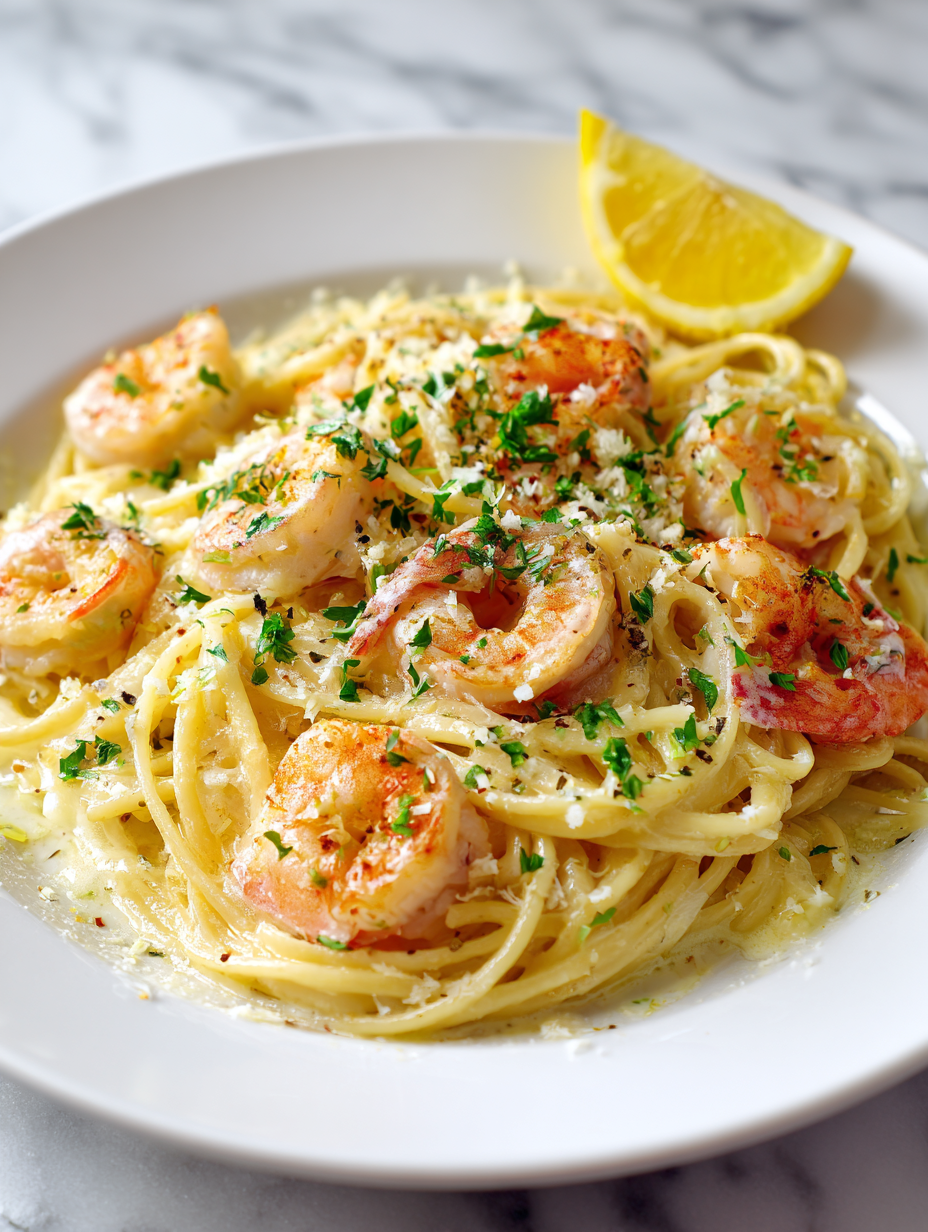
Shrimp Lemon Cream Pasta
Ingredients
Equipment
Method
- Bring a large pot of salted water to a boil and cook the pasta until al dente, about 10 minutes. Drain and set aside, reserving half a cup of pasta water.
- While the pasta cooks, peel and devein the shrimp if not already prepared. Heat a large skillet over medium-high heat and add a tablespoon of olive oil.
- Add the shrimp to the hot skillet, cooking for about 2-3 minutes per side until they turn pink and opaque. Remove the shrimp from the pan and set aside.
- In the same skillet, add another tablespoon of olive oil and minced garlic. Sauté for about 30 seconds until fragrant, stirring constantly to avoid burning.
- Pour in the heavy cream and add lemon juice. Stir gently and bring to a simmer, letting it thicken slightly for 2 minutes, creating a silky, fragrant sauce.
- Return the cooked shrimp to the skillet, stirring to coat them in the sauce. Add the cooked pasta and toss everything together, adding a splash of reserved pasta water if needed to loosen the sauce and make it glossy.
- Season with salt and pepper to taste. Cook for another 1-2 minutes until everything is heated through and well combined.
- Finish by sprinkling chopped parsley over the top for a fresh, vibrant touch. Serve immediately while warm, with lemon wedges if desired.
Pro tips for perfect shrimp lemon cream pasta
- Bold garlic: Mince garlic finely and cook briefly until fragrant, to avoid bitterness and maximize aroma.
- Lemon zest: Add lemon zest early in the sauce for a deeper citrus flavor that infuses throughout.
- Pasta water: Reserve starchy pasta water; it helps loosen the sauce and makes it cling better.
- Shrimp timing: Cook shrimp just until pink and opaque—overcooking makes them rubbery, so stay attentive.
- Cream temperature: Warm the cream slightly before adding to prevent curdling and ensure silky sauce.
- Gentle simmer: Keep the sauce at a gentle simmer; too high heat can break the cream and cause separation.
- Herb finishing: Add fresh herbs at the end to preserve their bright flavor and vibrant color.
Common mistakes and how to fix them
- FORGOT to adjust heat when adding lemon juice → can curdle or become bitter.
- DUMPED in cold cream directly from fridge → warm slightly before adding to prevent clumps.
- OVER-TORCHED shrimp → cook shrimp in smaller batches or lower heat to avoid rubbery texture.
- FAILED to reserve pasta water → use it to loosen sauce if it becomes too thick or greasy.
Quick Fixes for Shrimp Lemon Cream Pasta
- When sauce seizes, splash in warm water or cream, stir gently to loosen.
- If pasta sticks, rinse briefly with warm water before tossing with sauce.
- Splash lemon juice early if sauce dulls—adds freshness and brightens flavors.
- Patch over overcooked shrimp with a squeeze of lemon and fresh herbs.
- Shield sauce from overcooking by removing from heat as soon as it thickens, then stir in lemon zest.
Prep, store, and reheat tips
- Cook the pasta ahead of time and toss with a little oil to prevent sticking; store in an airtight container for up to 2 days. Reheat gently in hot water or microwave, expecting the texture to soften slightly.
- Peel and devein the shrimp in advance; keep refrigerated for up to 1 day. For best texture, add the shrimp to the sauce just before serving to avoid overcooking during reheating.
- Prepare the lemon cream sauce up to 1 day ahead; cool completely and store in an airtight jar or container. Reheat gently over low heat, stirring constantly until warmed through and fragrant. The sauce may thicken slightly—thin with a splash of warm cream or pasta water if needed.
- Chop herbs like parsley or basil ahead of time, store wrapped in a damp paper towel inside a sealed container. Fresh herbs tend to lose brightness after a day, so add just before serving for the best flavor and color.
- For leftovers, store the assembled pasta in the fridge for up to 24 hours. Expect the sauce to thicken and the shrimp to lose some of their initial juiciness. Reheat slowly, adding a splash of water or cream to restore creaminess and prevent separation.
Top questions about shrimp lemon cream pasta
1. Can I use bottled lemon juice?
Use fresh lemon juice for the brightest, most zesty flavor. Bottled lemon can work in a pinch, but it’s less vibrant.
2. How do I know when shrimp are done?
Cook the shrimp just until pink and opaque, about 2-3 minutes per side. Overcooking makes them rubbery.
3. Why should I save pasta water?
Reserve some pasta water before draining; it’s starchy and helps loosen the sauce if it gets too thick.
4. Should I include lemon zest?
Add lemon zest early in the sauce to deepen the citrus flavor. It also adds a fragrant, bright aroma.
5. How do I prevent the sauce from curdling?
Use a gentle simmer when adding cream and lemon juice to prevent curdling and keep the sauce silky.
6. Can I make this dairy-free?
For a dairy-free version, coconut cream offers a rich alternative, but it adds a subtle coconut flavor.
7. Can I use dried herbs instead of fresh?
Fresh herbs like parsley or basil at the end brighten the dish. Dried herbs won’t give the same vibrant flavor.
8. What’s the ideal pasta texture?
Cook pasta to al dente, which is slightly firm. Overcooked pasta can become mushy when mixed with the sauce.
9. What type of oil should I use?
Use a good-quality olive oil for a fruity, peppery aroma that enhances the seafood and citrus flavors.
10. Can I make this ahead of time?
Serve immediately for the best velvety sauce. Reheating can cause the sauce to separate or thicken too much.
This dish isn’t just a quick fix; it’s a little reminder of how vibrant and comforting simple ingredients can be. When the lemon zest hits the hot sauce, and the shrimp are just tender, it’s a moment of honest satisfaction that sticks with me.
In busy times, it’s these straightforward, flavorful bowls that keep me grounded. Sharing it feels like passing along a bit of that uncomplicated joy—no fuss, just good food that makes you pause for a second.