
Shrimp masala is one of those dishes that often gets overshadowed by more popular curries, but I think it deserves a moment in the spotlight. There’s something about balancing the fiery spices with a touch of honey that makes it both comforting and a little surprising. It’s a recipe that’s flexible enough to adapt to your spice tolerance and sweet tooth, which is why I keep coming back to it, especially when I want something cozy but not heavy.
I first stumbled on this version during a chaotic dinner rush, where I was craving something bold and warm but didn’t want to fuss over complicated techniques. The honey was a game-changer—adding a subtle depth that made the spices sing without overwhelming. It’s not a traditional take, but it’s honest, it’s real, and it’s a reminder that a little tweak can turn a good dish into something memorable.
type
Focusing on the underappreciated art of balancing spice and sweetness in shrimp masala, this recipe explores how a touch of honey can elevate the dish, making it both comforting and intriguingly complex.
Balancing Spice and Sweetness
- Cooking this reminds me of my grandmother’s kitchen, where the air always smelled of spices and stories.
- I love how the zing of fresh ginger makes the whole dish lively and bright, cutting through the richness.
- Every time I make this, I feel a little proud—like I’ve captured a bit of the magic from my favorite Indian restaurants.
- It’s a dish that’s saved me on busy weeknights, offering comfort and a burst of flavor in under 30 minutes.
- Sharing this with friends always sparks conversations about travel, spices, and the joy of simple, soulful cooking.
The story behind this recipe
- This shrimp masala recipe came about during a particularly hectic week when I needed something quick but full of flavor. I wanted to create a dish that balanced bold spices with a touch of sweetness, inspired by flavors I loved from street food stalls in Mumbai. The first time I made it, I was surprised at how just a splash of honey transformed the heat into a rich, layered experience. It’s become my go-to for cozy, satisfying nights when I don’t want to fuss but still crave something memorable.
- Cooking it reminds me of a trip to India, where the bustling markets and fragrant stalls left a mark. Every spoonful feels like a little adventure—spicy, sweet, tangy all at once. It’s a dish that’s quick to pull together but tastes like it’s been simmering all afternoon. I keep coming back to it because it’s honest, adaptable, and somehow always hits the right note when I need comfort and excitement at the same time.
- heading
Trivia and historical tidbits
- Shrimp masala has roots in coastal Indian cuisine, blending fresh seafood with bold spices.
- This dish became popular in Indian street food stalls, where quick, flavorful meals are essential.
- The use of honey in some recipes is a modern twist, balancing heat with a touch of natural sweetness.
- Historically, masala refers to a spice mixture, but each region in India has its own unique blend.
- In recent years, shrimp masala has gained popularity worldwide, often adapted to local ingredients and tastes.
Key ingredients and tips
- Shrimp: I prefer deveined, raw shrimp with tails off, which cook quickly and stay tender. Swap for scallops if you want a different seafood vibe, but reduce cooking time slightly for scallops to avoid overcooking.
- Tomatoes: Use ripe, juicy tomatoes or canned diced ones for a rich base. If you want a less tangy sauce, skip the vinegar or lemon juice at the end and let the tomatoes shine.
- Garam Masala: This spice blend is my secret weapon—warm, fragrant, and complex. Try a homemade mix or a good store-bought brand, but toast it lightly in oil first for extra depth.
- Ginger & Garlic: Fresh is best—bright, pungent, and slightly spicy. If you only have paste, use half the amount to avoid overpowering the dish, and sauté until fragrant.
- Honey: I love a touch of honey for sweetness—glossy, molasses-y, and balancing the spices. If you prefer it less sweet, reduce or omit, but it really helps round out the heat.
- Cilantro: Fresh cilantro adds a burst of herbal brightness and a pop of green. Use the leaves and tender stems; if you dislike cilantro, parsley works but won’t give the same zing.
- Oil: Use a neutral oil like vegetable or canola for cooking the spices. For a richer flavor, a splash of ghee can add nutty depth, especially if you love Indian flavors.
Spotlight on key ingredients
Shrimp:
- I prefer deveined, raw shrimp with tails off, which cook quickly and stay tender. Swap for scallops if you want a different seafood vibe, but reduce cooking time slightly for scallops to avoid overcooking.
- Tomatoes: Use ripe, juicy tomatoes or canned diced ones for a rich base. If you want a less tangy sauce, skip the vinegar or lemon juice at the end and let the tomatoes shine.
Garam Masala & Ginger:
- Garam Masala: This spice blend is my secret weapon—warm, fragrant, and complex. Try a homemade mix or a good store-bought brand, but toast it lightly in oil first for extra depth.
- Fresh Ginger: Bright, pungent, and slightly spicy. It releases a fiery aroma when sautéed, and a little goes a long way to brighten the dish’s flavor.
Notes for ingredient swaps
- Seafood Swap: Use scallops or firm white fish instead of shrimp for a different texture, but reduce cooking time to prevent overcooking.
- Tomato Alternatives: Fresh ripe tomatoes give a bright, juicy base; canned diced tomatoes are a reliable substitute, especially in off-season.
- Garam Masala: Try a homemade blend or a different brand for varied warmth and complexity. Toast it in oil first for extra depth.
- Sweetener Options: Maple syrup or agave can replace honey, adding their own unique sweetness—less floral, more earthy.
- Herb Variations: Parsley or Thai basil can substitute cilantro if you dislike it, but expect a different herbal note that changes the dish’s freshness.
- Oil Choices: Ghee adds nuttiness and richness, but neutral oils like sunflower or vegetable work fine if you want a lighter dish.
- Spice Level: Add a pinch of cayenne or chili flakes to boost heat; skip for milder flavor, but adjust cooking time if adding whole dried chilies.
Equipment & Tools
- Skillet: Cook the spices and shrimp evenly.
- Knife: Chop onions, garlic, and tomatoes.
- Wooden spoon: Stir and sauté ingredients without scratching the pan.
- Small bowl: Prep spice blends and hold chopped ingredients.
Step-by-step guide to shrimp masala
- Equipment & Tools: Gather a 30cm (12-inch) wide skillet for even heat, a sharp knife for chopping, a wooden spoon for stirring, and a small bowl for spice prep.
- Heat a tablespoon of oil over medium heat (about 160°C/320°F). Once shimmering, add a teaspoon of cumin seeds. Let them crackle for 20 seconds until fragrant.
- Add finely chopped onion (about 1 cup). Cook, stirring often, for 5-7 minutes until golden and soft. Smell the caramelizing onions—sweet and toasty.
- Stir in minced garlic (2 cloves) and grated fresh ginger (1 inch piece). Cook for 1 minute until fragrant, the kitchen should fill with spicy warmth. If it sticks, splash a little water to deglaze.
- Add 2 teaspoons of coriander powder, 1 teaspoon of turmeric, and 1 teaspoon of garam masala. Toast spices for 30 seconds—look for a darker, aromatic hue and a slight crackle.
- Pour in 1 can (14 oz) of diced tomatoes or 2 ripe fresh tomatoes, chopped. Simmer on low (about 80°C/175°F) for 10 minutes until saucy and slightly thickened. The smell should be tangy and rich.
- Stir in 1 pound of raw, deveined shrimp, tails off. Cook for about 3-4 minutes, turning often. The shrimp should turn pink and curl tightly—avoid rubbery texture. If overcooked, set aside and reheat gently later.
- Drizzle in 1 teaspoon of honey and a squeeze of lemon juice. Stir well and cook for 2 more minutes. Taste for balance—spicy, sweet, and a hint of brightness.
- Finish with chopped fresh cilantro. Turn off heat and let rest for 2 minutes. The sauce will thicken slightly and intensify in aroma.
- Plate the shrimp masala with rice or flatbread. Serve hot, garnished with extra cilantro if desired. The sauce should be glossy, fragrant, and slightly thickened.
Let the dish rest for 2 minutes off heat. Garnish with extra cilantro, then serve immediately with rice or bread. The sauce will thicken slightly and deepen in flavor.
How to Know It’s Done
- Shrimp: Pink, firm, and curled; no translucent flesh remains.
- Sauce: Deep red-brown, fragrant with spices, slightly thickened but still saucy.
- Aromas: Rich, warm spices with a hint of citrus and honey, filling the kitchen.
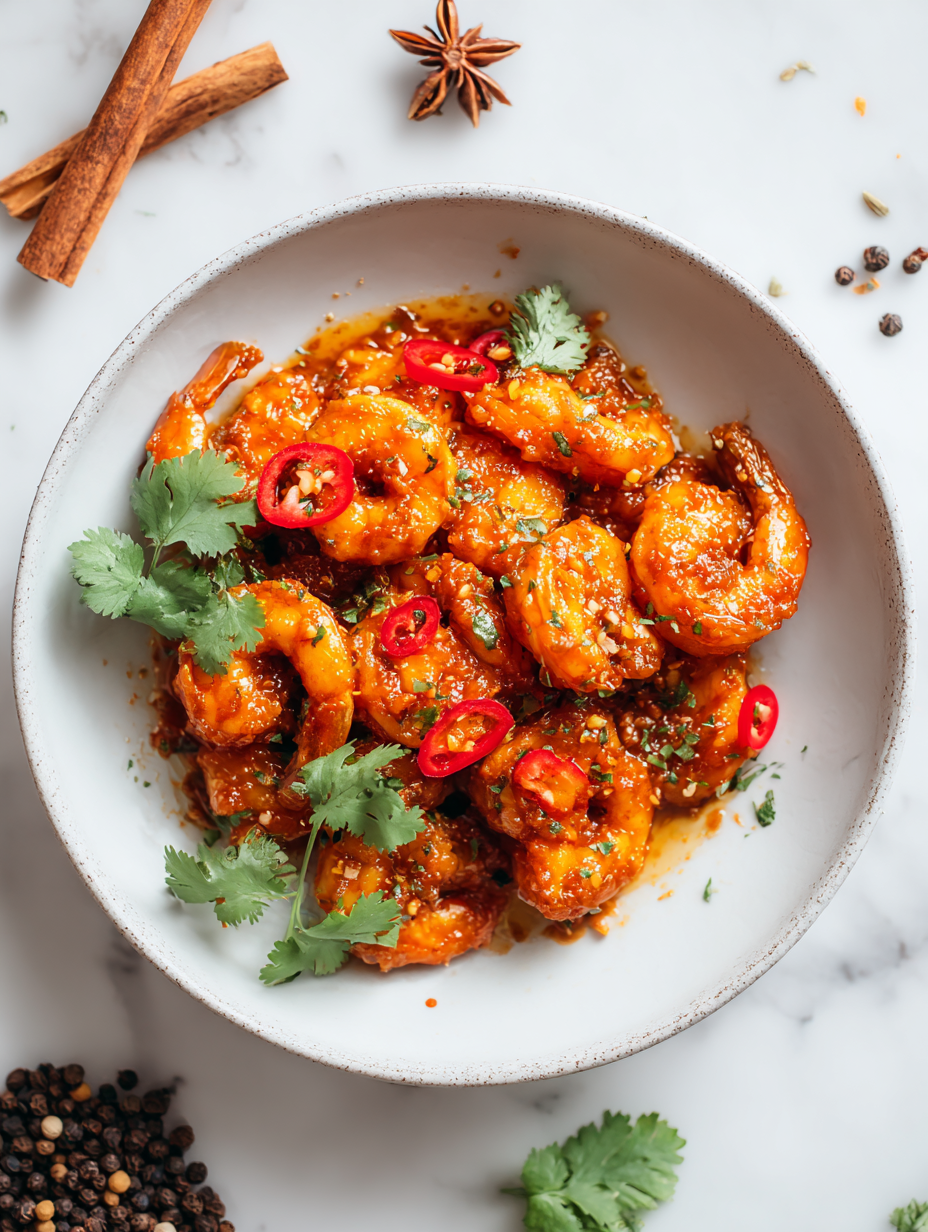
Shrimp Masala with Honey and Spices
Ingredients
Equipment
Method
- Heat a tablespoon of oil in a skillet over medium heat until shimmering, then add a teaspoon of cumin seeds and cook until fragrant, about 20 seconds.
- Add the finely chopped onion to the skillet and cook, stirring often, for 5-7 minutes until golden and soft, filling your kitchen with a sweet, toasty aroma.
- Stir in the minced garlic and grated ginger, cooking for about 1 minute until fragrant and slightly spicy, ensuring they don't stick by adding a splash of water if needed.
- Sprinkle in the toasted garam masala, coriander, and turmeric, cooking for 30 seconds until the spices release their aroma and turn darker, infusing the oil.
- Add the diced tomatoes and simmer gently for 10 minutes, stirring occasionally, until the sauce thickens slightly and turns a rich, deep red.
- Gently fold in the raw shrimp, spreading them evenly in the sauce, and cook for about 3-4 minutes until they turn pink and curl tightly, indicating they’re perfectly tender.
- Drizzle the honey over the shrimp and sauce, then squeeze in fresh lemon juice, stirring to combine and cook for an additional 2 minutes, balancing heat with sweetness.
- Remove from heat and sprinkle with chopped cilantro for a burst of herbal freshness, letting the dish rest for 2 minutes to allow flavors to meld.
- Serve the shrimp masala hot, accompanied by rice or flatbread, and enjoy the glossy, aromatic sauce with tender shrimp and a hint of sweetness.
Tips for perfect shrimp masala
- Spice Bloom: Toast spices in oil until fragrant to unlock their full aroma and flavor.
- Quick Shrimp Sear: Cook shrimp just until they turn pink and curl—overcooking makes them rubbery.
- Layer Flavors: Add honey after the spices and tomatoes have cooked down for a balanced sweetness.
- Smell Check: The sauce should smell warm, spicy, and slightly sweet—adjust heat or sweetness if needed.
- Color Cues: Look for a rich, deep red-brown sauce with a glossy finish for perfect consistency.
- Simmer Gently: Keep the sauce at low simmer to develop flavors without burning or sticking.
- Fresh Finish: Toss in cilantro right before serving for maximum brightness and vibrant aroma.
Common mistakes and how to fix them
- FORGOT to adjust heat after adding shrimp → turn heat to medium-low to prevent overcooking.
- DUMPED spices prematurely → toast spices until fragrant, about 30 seconds, for full flavor.
- OVER-TORCHED the sauce → simmer gently, watch for a deep color and rich aroma instead of a boil.
- SKIPPED the resting step → let the dish sit for 2 minutes to allow flavors to meld and sauce to thicken.
Quick Fixes and Pantry Swaps
- When sauce is too thick, splash in warm water and stir gently to loosen.
- If shrimp overcooks, quickly add a splash of broth or water, then reheat gently.
- Splash lemon juice or vinegar if sauce lacks brightness—freshness wakes it up.
- Patch bland spice flavor by stirring in a pinch of garam masala or fresh herbs.
- Shield sauce from burning by reducing heat immediately and stirring often.
Prep, store, and reheat tips
- Prep the spice paste and chop ingredients a day ahead; store in airtight containers in the fridge for up to 24 hours, keeping flavors fresh and vibrant.
- Cook the sauce partially and keep refrigerated for up to 2 days; the flavors deepen overnight, making reheating even more flavorful.
- Reheat gently in a saucepan over low heat, stirring often, until steaming and fragrant—look for a glossy, aromatic sauce with a balanced heat and sweetness.
- Cooked shrimp are best used within 1 day; over time, their texture can become a bit rubbery, so add fresh shrimp during reheating for best results.
- Store leftovers in an airtight container in the fridge for up to 2 days; the dish will develop a richer, more concentrated spice aroma after resting.
Top questions about shrimp masala
1. Can I use other seafood instead of shrimp?
Use deveined shrimp with tails off for quick, tender results. You can swap with scallops, but reduce cooking time to avoid overcooking them.
2. Can I substitute canned tomatoes?
Fresh tomatoes give a brighter, juicier sauce. Canned diced tomatoes work well, especially off-season or for convenience.
3. What if I don’t have garam masala?
Garam masala is key for warmth and aroma. Toast it lightly in oil to unlock its full flavor, or try a different blend for variety.
4. Can I omit the honey?
A teaspoon of honey adds subtle sweetness, balancing the spices. Reduce or skip if you prefer a less sweet dish.
5. Is fresh ginger necessary?
Use fresh ginger for brightness and a spicy kick. If only paste is available, use half the amount and sauté until fragrant.
6. How do I know when shrimp are done?
Cook shrimp just until pink and curled, about 3-4 minutes. Overcooking makes them rubbery, so keep an eye on their color and texture.
7. Can I skip cilantro?
Add cilantro at the end for a fresh, herbal brightness. Parsley can be used as a milder alternative if cilantro isn’t to your taste.
8. What oil works best?
Use neutral oil like vegetable or canola for cooking. Ghee adds nuttiness, but keep in mind it has a richer flavor.
9. How can I make it milder or spicier?
Adjust spice levels by adding chili flakes or cayenne. For milder flavor, skip the heat and focus on aromatic spices.
10. How do I reheat leftovers without overcooking the shrimp?
Reheat gently on low heat, stirring often, until steaming. The sauce thickens slightly and the flavors intensify overnight.
This shrimp masala recipe is a reminder that simple ingredients, when balanced carefully, can create something truly memorable. The warm spices and tender shrimp come together quickly, making it perfect for a weekday dinner that feels special without much fuss.
In the end, it’s about those small moments—smelling the fragrant sauce simmering, tasting that perfect balance of heat and sweetness, and sharing it with someone else. It’s a dish that’s honest, adaptable, and rooted in a little bit of nostalgia, right in the middle of busy life.