
This Shrimp Pasta Primavera isn’t just about quick cooking; it’s about capturing the fleeting brightness of fresh, seasonal vegetables. When I make this, I think about how a simple toss of cherry tomatoes, zucchini, and bell peppers can turn a humble dish into something almost celebratory, especially with just a squeeze of lemon at the end. It’s a reminder that the best meals often come from respecting ingredients at their peak.
What I love about this recipe is how it emphasizes timing and ingredient quality over fancy techniques. You can toss everything together in one pan, but if the vegetables are crisp-tender and the shrimp is perfectly pink, it’s magic. It’s a dish that demands your attention to freshness—no frozen veggies or dull shrimp here—making each bite lively and full of the season’s best flavors.
Focusing on how the freshness of seasonal vegetables transforms this shrimp pasta from everyday to a vibrant, almost celebratory dish, highlighting the importance of timing and ingredient quality over complex techniques.
Celebrating Freshness in Every Bite
- Cooking this dish always reminds me to appreciate the fleeting beauty of seasonal produce.
- The vibrant colors and fresh scents make it feel like a celebration, even on a busy weeknight.
- There’s an honest joy in tossing everything together and tasting that perfect balance of lemon and herbs.
- Making this dish connects me to memories of summer evenings with friends and good conversations.
- It’s a reminder that simple, fresh ingredients can turn an ordinary meal into something special.
The story behind this recipe
This recipe came together one chaotic summer evening when I had just a handful of fresh vegetables and some shrimp left from a previous meal. Instead of letting them go bad, I threw everything into a pan, trusting that simple, good ingredients would do the heavy lifting. The bright, crisp vegetables and tender shrimp made me realize how much flavor and joy can be packed into a straightforward, seasonal dish. It’s become my go-to for those nights when I want something quick, vibrant, and honest, with a taste that reminds me of summer’s fleeting peak.
Historical and Cultural Roots
- This dish draws inspiration from the Italian-American tradition of incorporating fresh, seasonal vegetables into pasta, which gained popularity in the mid-20th century as a way to celebrate local produce.
- Primavera, meaning ‘spring’ in Italian, originally referred to dishes that highlight fresh spring vegetables, but now it’s used year-round with seasonal variations.
- Shrimp pasta dishes became widespread in the United States during the post-war culinary boom, blending Italian influences with local seafood abundance.
- The concept of a quick, vegetable-rich pasta reflects the mid-century shift towards more health-conscious, fast-cooking meals that still feel celebratory.
Key Ingredients & Tips
- Shrimp: I prefer wild-caught, deveined, and peeled—gets that sweet, briny flavor right out of the shell, so you might want to buy fresh or thaw properly. The smell should be ocean-bright, not fishy, and cooking them just until they turn pink keeps them tender.
- Pasta: I usually go for linguine or fettuccine—something that traps the sauce well. Cook until just al dente, about 1 minute less than package directions, so it doesn’t turn mushy when combined. Keep some pasta water; it’s magic for that silky sauce.
- Vegetables: Bright bell peppers, zucchini, and cherry tomatoes—use what’s seasonal and vibrant. Slice them thin enough so they cook quickly but still hold some bite. The aroma should be fresh and slightly sweet when sautéed, not limp.
- Garlic & Herbs: Fresh garlic minced finely—smells pungent and spicy, but sweetens as it cooks. Fresh basil or parsley adds a punch of aroma and color, but add herbs at the end to keep their brightness alive. Dried herbs can be a quick stand-in but won’t have the same vibrancy.
- Lemon & Olive Oil: Bright lemon juice and good extra virgin olive oil—think zesty, fresh, and slightly fruity. The lemon brightens the dish and cuts through the richness of the shrimp. Use good oil; it makes all the difference when tossed at the end.
- Parmesan: Freshly grated Parmesan adds that umami hit and melts into the sauce beautifully. Opt for real Parmesan, and sprinkle just before serving to keep its sharpness intact.
Spotlight on key ingredients
Shrimp:
- I prefer wild-caught, deveined, and peeled—gets that sweet, briny flavor right out of the shell, so you might want to buy fresh or thaw properly. The smell should be ocean-bright, not fishy, and cooking them just until they turn pink keeps them tender.
- Pasta: I usually go for linguine or fettuccine—something that traps the sauce well. Cook until just al dente, about 1 minute less than package directions, so it doesn’t turn mushy when combined. Keep some pasta water; it’s magic for that silky sauce.
Vegetables & Herbs:
- Vegetables: Bright bell peppers, zucchini, and cherry tomatoes—use what’s seasonal and vibrant. Slice them thin enough so they cook quickly but still hold some bite. The aroma should be fresh and slightly sweet when sautéed, not limp.
- Lemon & Herbs: Bright lemon juice and fresh herbs—think basil or parsley—add a punch of aroma and color. Add herbs at the end to keep their brightness alive. The lemon brightens the dish and cuts through the richness of the shrimp.
Notes for ingredient swaps
- Seafood Swap: Use scallops or firm white fish instead of shrimp. They’ll cook quickly but won’t have that briny sweetness, so adjust seasoning accordingly.
- Pasta Alternatives: Try gluten-free or vegetable-based noodles. They may hold sauce differently or have a slightly different texture, but still delicious.
- Vegetable Variations: Swap zucchini and bell peppers for asparagus or snap peas. Keep the crunch and freshness, just with different seasonal notes.
- Herb Swap: Use fresh oregano or thyme if basil isn’t available. They add different aromatic notes but still brighten the dish.
- Lemon Substitute: Lime juice offers a slightly different tang, brighter and more floral. Or skip citrus altogether and add a splash of white wine for acidity.
- Oil Options: Avocado oil or light sesame oil can replace olive oil. They bring subtle flavor and heat tolerance, but won’t have quite the same fruity note.
- Cheese Choices: Pecorino Romano or Grana Padano can replace Parmesan. They’re sharper or milder, changing the final flavor profile slightly.
Equipment & Tools
- Large skillet or saute pan: For cooking everything together evenly.
- Large pot: For boiling pasta.
- Tongs: To toss and serve ingredients.
- Sharp knife: For prepping vegetables and shrimp.
- Cutting board: To chop vegetables and shrimp prep.
Step-by-step guide to Shrimp Pasta Primavera
- Equipment & Tools: Get a large skillet or saute pan (preferably non-stick) for even cooking. Have a pot for boiling pasta, tongs for tossing, and a sharp knife for prep ready.
- Boil water: Fill your pot with 4-6 liters of water. Add a generous pinch of salt. Bring to a rolling boil at 100°C (212°F).
- Cook pasta: Add linguine or fettuccine. Stir occasionally. Cook for 1 minute less than package instructions—aim for al dente. Drain, saving 1 cup of pasta water.
- Prep shrimp: While pasta cooks, peel and devein 300g shrimp. Pat dry with paper towels. Season lightly with salt and pepper.
- Sauté vegetables: In your skillet, heat 2 tbsp olive oil over medium heat (~160°C/320°F). Add sliced bell peppers, zucchini, and halved cherry tomatoes. Cook for 3-4 minutes until vegetables are crisp-tender and fragrant—aroma should be fresh and slightly sweet.
- Cook shrimp: Push vegetables aside. Add shrimp to the pan. Cook for 2-3 minutes per side until pink and opaque. Shake pan gently; shrimp should crackle and turn bright pink.
- Combine and season: Lower heat to medium. Add minced garlic (about 30 seconds until fragrant), a squeeze of lemon, and a splash of pasta water. Toss everything together. Cook for 1-2 minutes until sauce thickens slightly and coats the ingredients.
- Finish and serve: Remove from heat. Stir in chopped fresh basil or parsley. Grate Parmesan over the top. Rest for 1 minute, then plate immediately. Drizzle with a little extra olive oil if desired.
- Check doneness: Shrimp should be firm and bright pink. Pasta should be al dente, vegetables crisp but tender, and sauce shiny and clinging to everything.
Serve immediately on warm plates. Garnish with additional herbs and Parmesan. Drizzle with a bit of olive oil. Let sit for a minute to allow flavors to meld before digging in.
How to Know It’s Done
- Shrimp is opaque and pink all over.
- Pasta is tender but still has a bite.
- Vegetables are bright, crisp-tender, and fragrant.
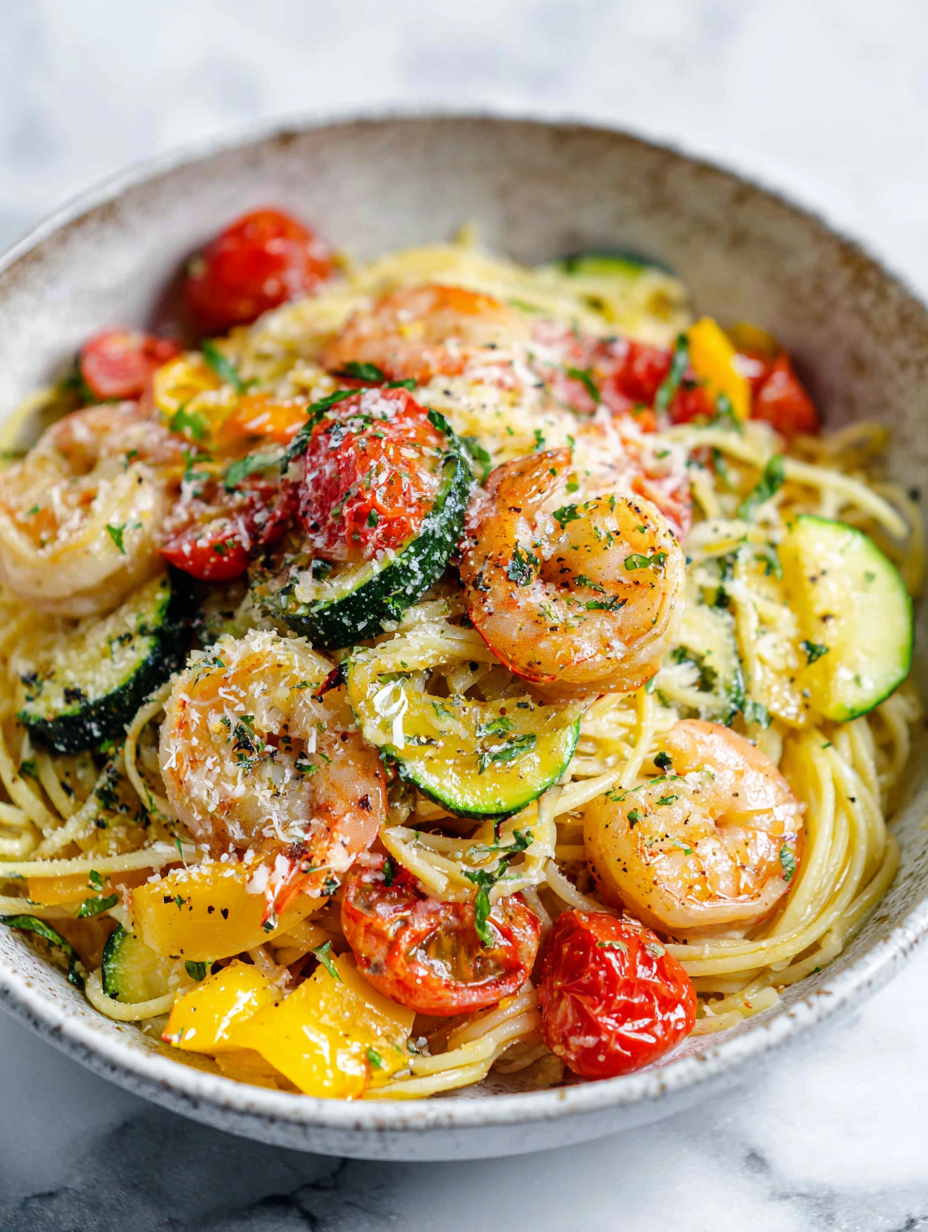
Shrimp Pasta Primavera
Ingredients
Equipment
Method
- Bring a large pot of salted water to a rolling boil. Add the pasta and cook until just al dente, about 1 minute less than package directions. Drain, reserving about a cup of pasta water, and set aside.
- While the pasta cooks, peel and devein the shrimp if not already done. Pat them dry and season lightly with salt and pepper.
- Heat 2 tablespoons of olive oil in a large skillet over medium heat until shimmering and fragrant. Add the sliced bell peppers, zucchini, and halved cherry tomatoes. Sauté for about 3-4 minutes until the vegetables are bright, fragrant, and just starting to soften.300 g shrimp
- Push the vegetables to one side of the pan. Add the shrimp to the empty side and cook for 2-3 minutes per side until they turn pink, opaque, and slightly firm to the touch. Gently shake the pan to distribute heat evenly.300 g shrimp
- Add the minced garlic to the pan with the shrimp and vegetables. Sauté for about 30 seconds until fragrant—be careful not to burn it. Squeeze in the juice of half a lemon and add a splash of reserved pasta water to create a light sauce.300 g shrimp
- Toss in the cooked pasta, stirring gently to coat everything evenly. Use a little more pasta water if needed to loosen the sauce and help it cling to the ingredients. Cook for another minute until heated through.300 g shrimp
- Remove the skillet from heat and stir in chopped fresh basil or parsley. Sprinkle the grated Parmesan cheese over the top and toss again gently. Taste and adjust seasoning with more lemon juice or herbs if desired.300 g shrimp
- Divide the vibrant, fragrant pasta among warm plates. Garnish with additional herbs and a drizzle of olive oil if desired. Serve immediately and enjoy the bright flavors and textures.
Pro tips for perfect Shrimp Pasta Primavera
- Use high heat to sear shrimp quickly, locking in juices and preventing overcooking.
- Toss vegetables in olive oil and salt before cooking; enhances their natural sweetness and crispness.
- Add garlic only in the last 30 seconds of sautéing to avoid burning and bitterness.
- Save a cup of pasta water; its starchiness helps create a silky, cohesive sauce.
- Cook pasta just shy of al dente; it will finish cooking in the sauce, preventing mush.
- Finish with a squeeze of lemon and fresh herbs off heat for maximum brightness and aroma.
- Rest the dish for a minute after tossing; flavors meld better and ingredients stay vibrant.
Common mistakes and how to fix them
- FORGOT to check shrimp color → Sauté until shrimp turn uniformly pink and opaque.
- DUMPED pasta water too soon → Save pasta water for adjusting sauce consistency.
- OVER-TORCHED vegetables → Remove from heat once vegetables are bright and slightly crisp.
- FAILED to stir while cooking shrimp → Stir gently to prevent sticking and ensure even cooking.
Fast Fixes and Swaps
- When shrimp is gray → Splash with lemon juice to brighten and revive color.
- If pasta clumps → Shake off excess water and toss quickly in hot sauce.
- When vegetables are limp → Patch with a quick sear over high heat for crispness.
- Dumped too much pasta water → Save a splash to loosen sauce or adjust consistency.
- Splash with lemon for brightness and shimmer.
Prep, store, and reheat tips
- Prepare all vegetables and shrimp before starting; store in airtight containers in the fridge for up to 24 hours. The fresh aroma stays lively, making assembly quicker.
- Cook the pasta al dente and toss with a little olive oil to prevent sticking. Store in a sealed container for up to 24 hours—pasta might absorb flavors, so reheat with extra pasta water.
- Shrimp can be cooked and chilled separately, stored for up to 2 days. Reheat gently in a skillet, smelling for that faint ocean-briny aroma before adding to the dish.
- Reheat leftovers in a skillet over medium heat (about 160°C/320°F). Add a splash of pasta water or olive oil to revive the sauce and keep it shiny. Expect a slightly muted vegetable crunch after storage.
- For best flavor, reheat within 1 day. The bright, fresh notes of lemon and herbs soften over time, so consider adding a squeeze of lemon and fresh herbs just before serving again.
Top questions about Shrimp Pasta Primavera
1. How can I tell if shrimp is fresh?
Fresh shrimp should smell ocean-bright, not fishy, and turn pink and opaque when cooked. Use quality, fresh ingredients for best flavor.
2. How do I know when the pasta is perfectly cooked?
Cook pasta until just al dente—about 1 minute less than package suggests. It will finish cooking in the sauce, preventing mush.
3. How do I get vegetables just right?
Sauté vegetables until crisp-tender, about 3-4 minutes. They should be vibrant, slightly sweet, and fragrant, not limp.
4. What temperature should I cook the shrimp at?
Use high heat (~160°C/320°F) for searing shrimp quickly and locking in juices. Keep an eye for a bright pink, opaque color.
5. Why save pasta water, and how do I use it?
Save some pasta water before draining; its starchy quality helps thicken and emulsify the sauce for a silky texture.
6. When should I add garlic during cooking?
Add garlic near the end of sautéing—about 30 seconds—until fragrant. Burning garlic causes bitterness, so stir constantly.
7. How do I keep the dish fresh and flavorful?
Finish with lemon juice and herbs off heat to keep their bright aroma and flavor lively. Add Parmesan just before serving for richness.
8. How should I store and reheat leftovers?
Leftovers can be stored in the fridge for up to 24 hours. Reheat gently in a skillet with a splash of water or oil, smelling for that bright lemon aroma.
9. Can I substitute different vegetables?
Use vibrant seasonal vegetables—like zucchini, bell peppers, cherry tomatoes—for maximum freshness and flavor in the dish.
10. How do I avoid overcooking the shrimp?
Overcooking shrimp turns it rubbery. Cook until pink and opaque—about 2-3 minutes per side—and don’t overheat during reheat.
Cooking this shrimp pasta primavera reminds me how a dish can be a celebration of seasonality and fresh ingredients, especially when spring vegetables are at their peak. It’s so satisfying to see the bright colors and smell that fresh, slightly sweet aroma while everything comes together.
In the end, it’s about those simple moments—tossing everything in one pan, tasting for balance, and sharing a meal that’s honest and lively. No fuss, just good, fresh flavors that make any day feel a little brighter.