
Balancing the garlicky, buttery sauce with the sweet, tender shrimp is what makes this dish sing. It’s not just about following a recipe, but about tuning into those little moments—like how the garlic turns golden and fragrant, or how the shrimp curl up perfectly in the pan. Every step is a small dance, and the payoff is a bright, comforting plate that feels like a warm hug.
I’ve made this recipe more times than I can count, often in the chaos of weeknights or when friends drop by unexpectedly. It’s simple, but it’s honest. The magic comes from understanding how the ingredients play off each other—the rich butter, the zesty lemon, and the sweetness of the shrimp—all in harmony. That’s what I want you to get right, not just cook it, but really taste it.
Focusing on how to balance the garlicky, buttery sauce with the sweet, tender shrimp for a perfect harmony of flavors.
The secret to perfect shrimp balance
- Making this dish reminds me of summer nights at my grandma’s house, where the smell of garlic and butter filled the air.
- I used to think shrimp was tricky to cook perfectly, but now I love how quick and forgiving this recipe is.
- There’s a rush of pride when I serve this and see the first forkful disappear in a single bite.
- Cooking this dish always feels like a small victory—simple ingredients coming together in a way that feels just right.
- It’s one of those recipes I turn to when I need comfort, a reminder that good food doesn’t need fuss.
The story behind this recipe
This recipe was born out of a busy weekend where I needed something quick but satisfying, and I realized how much I love the way shrimp and garlic come alive in butter. It’s become a go-to for those nights when I want comfort but don’t have hours to cook. Every time I make it, I remember that good food doesn’t need to be complicated to feel special. It’s about the little moments—smelling the garlic toast in the pan, watching the shrimp turn pink, and knowing a simple dish can still wow.
Historical & Cultural Insights
- Shrimp scampi has roots in Italian-American cuisine, though the exact origins are debated among food historians.
- The term ‘scampi’ originally referred to a type of small lobster or langoustine in Italy, not shrimp, which led to adaptations in American cooking.
- This dish became popular in New York City eateries in the mid-20th century, blending Italian flavors with local seafood bounty.
- The classic combination of garlic, lemon, and butter in shrimp scampi reflects a simple, yet rich flavor profile cherished worldwide.
- Over time, many home cooks have personalized the recipe, adding white wine, red pepper flakes, or fresh herbs for extra flair.
Key Ingredients Breakdown
- Garlic: I love the way fresh garlic turns fragrant and golden in butter; use good quality garlic for that punch of aroma, and don’t skimp—crush it well for maximum flavor.
- Shrimp: When I buy shrimp, I look for firm, pink ones with a slight ocean smell; defrost in cold water and pat dry—excess moisture will make them spatter.
- Butter: I prefer European-style butter for its richer, creamier note; if you want a lighter feel, go for a good quality unsalted variety, but don’t skip the richness.
- Lemon: Bright and zesty, the lemon’s juice lifts everything; roll it on the counter first to get more juice out, and zest for extra zing if you like it punchy.
- Pasta: I use spaghetti or linguine—long noodles that hold sauce well; cook until just al dente, as they’ll finish cooking in the pan, avoiding mush.
- Red Pepper Flakes: Just a pinch adds a smoky heat; if you’re sensitive, start small and taste as you go—this dish isn’t about burn, but a gentle kick.
- Parsley: Fresh parsley adds a pop of color and freshness; chop it finely last-minute to keep its bright, herbal note and avoid wilting.
Spotlight on key ingredients
Garlic:
- I love the way fresh garlic turns fragrant and golden in butter; use good quality garlic for that punch of aroma, and don’t skimp—crush it well for maximum flavor.
- Shrimp: When I buy shrimp, I look for firm, pink ones with a slight ocean smell; defrost in cold water and pat dry—excess moisture will make them spatter.
- Butter: I prefer European-style butter for its richer, creamier note; if you want a lighter feel, go for a good quality unsalted variety, but don’t skip the richness.
Lemon and pasta:
- Lemon: Bright and zesty, the lemon’s juice lifts everything; roll it on the counter first to get more juice out, and zest for extra zing if you like it punchy.
- Pasta: I use spaghetti or linguine—long noodles that hold sauce well; cook until just al dente, as they’ll finish cooking in the pan, avoiding mush.
- Red Pepper Flakes: Just a pinch adds a smoky heat; if you’re sensitive, start small and taste as you go—this dish isn’t about burn, but a gentle kick.
Notes for ingredient swaps
- Dairy-Free: Use coconut oil or olive oil instead of butter. Expect a slightly different richness and a more vegetal, fruity aroma.
- Gluten-Free: Swap regular pasta for rice noodles or gluten-free spaghetti. They’ll soak up the sauce differently but still hold the flavors well.
- Lemon Variations: Lime or vinegar can replace lemon for acidity. Lime gives a more floral tang, vinegar adds sharpness—adjust quantity carefully.
- Shrimp Alternatives: Scallops or bite-sized chunks of firm fish can stand in. They’ll cook quickly but might need slightly different timing.
- Herb Swaps: Parsley can be replaced with basil or cilantro for different herbal notes. Basil adds sweetness, cilantro offers freshness with a bit of bite.
- Spice Level: Red pepper flakes can be omitted or replaced with paprika for smoky warmth. For more heat, add a dash of cayenne.
- Pasta Type: Use gluten-free or veggie-based noodles for dietary needs. They may have different textures but will absorb the sauce nicely.
Equipment & Tools
- Large skillet: To cook the shrimp and sauce evenly
- Pasta pot: To boil the pasta
- Tongs: To handle and toss the pasta and shrimp
- Slotted spoon: To remove shrimp or pasta if needed
Step-by-step guide to shrimp scampi
- Gather equipment: a large skillet (preferably stainless steel or cast iron), tongs, a slotted spoon, and a pasta pot. Fill the pot with water, add a generous pinch of salt, and bring to a rolling boil at 100°C (212°F).
- Prep the shrimp: peel and devein if not already done. Pat dry thoroughly with paper towels to prevent splattering. Mince 4 cloves garlic finely and set aside.
- Cook the pasta: add spaghetti or linguine to boiling water. Stir occasionally. Cook until just al dente, about 8 minutes. Drain, reserving ½ cup pasta water. Set aside.
- Heat the skillet over medium-high heat (about 190°C/375°F). Add 2 tablespoons of butter and a splash of olive oil. Once melted and shimmering, add the minced garlic. Sauté for 30 seconds until fragrant and golden, stirring constantly to avoid burning.
- Add the shrimp: place them in the hot skillet in a single layer. Cook for 2-3 minutes per side, until they turn pink and opaque, and develop a slight curl. If they turn grey or rubbery, remove and check the heat—reduce if necessary.
- Deglaze with lemon juice: squeeze half a lemon into the pan, stirring to loosen any bits. Add a pinch of red pepper flakes for heat. If the garlic starts to burn or the shrimp overcook, reduce heat immediately.
- Combine pasta and sauce: add the drained pasta to the skillet. Toss well to coat in the garlicky butter sauce. If it seems dry, add a splash of reserved pasta water to loosen. Cook together for 1 minute, allowing flavors to meld.
- Finish and plate: sprinkle with chopped parsley, adjust seasoning with salt and pepper if needed. Rest for 1-2 minutes. Serve immediately, garnished with lemon wedges if desired.
- Check doneness: shrimp should be firm and pink, pasta tender but not mushy, garlic golden and fragrant, and sauce glossy and clinging to noodles.
Serve immediately on warmed plates. Garnish with extra parsley and lemon wedges. Toss lightly to finish, ensuring the sauce remains glossy and clings to the noodles.
How to Know It’s Done
- Shrimp are opaque and firm to the touch.
- Garlic is fragrant and golden, not burnt.
- Pasta is al dente, with a slight bite.
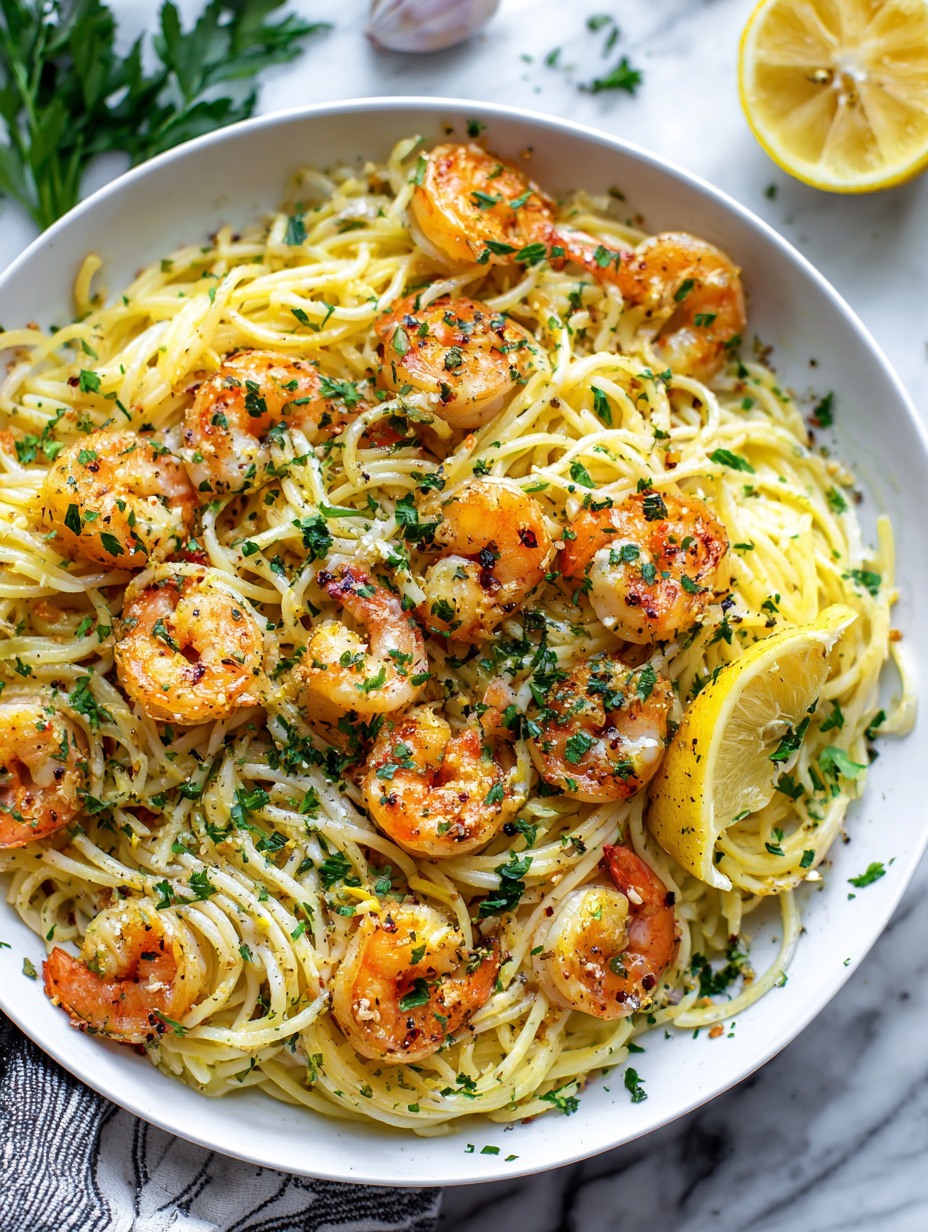
Garlic Butter Shrimp Pasta
Ingredients
Equipment
Method
- Fill a large pot with water, add a generous pinch of salt, and bring it to a rolling boil. Cook the pasta until just al dente, about 8 minutes, then drain, reserving half a cup of pasta water.
- While the pasta cooks, pat the shrimp dry thoroughly with paper towels. Mince the garlic finely and set aside.
- In a large skillet over medium-high heat, melt 2 tablespoons of butter with 1 tablespoon of olive oil. Once shimmering, add the minced garlic and sauté for about 30 seconds until fragrant and golden, stirring constantly.
- Add the shrimp to the skillet in a single layer. Cook for 2-3 minutes per side until they turn pink, opaque, and curl up slightly. Remove the shrimp from the pan and set aside.
- Squeeze half a lemon into the skillet, stirring to loosen any flavorful browned bits from the bottom. Add red pepper flakes and stir for a gentle spicy aroma.
- Return the cooked shrimp to the skillet, tossing to coat in the garlicky butter sauce. Cook together for 1-2 minutes to meld flavors.
- Add the drained pasta to the skillet, tossing well to coat in the sauce. If needed, stir in a splash of the reserved pasta water to loosen and create a glossy coating.
- Remove from heat, sprinkle with chopped parsley, and zest the remaining lemon over the top. Season with salt and pepper to taste.
- Serve immediately on warmed plates, garnished with extra lemon wedges if desired, and enjoy that aromatic, beautifully coated shrimp pasta.
Notes
Pro tips for shrimp scampi
- garlic: Crush garlic cloves well before chopping to release maximum aroma and flavor.
- Brighten with lemon: Add lemon juice off the heat to preserve its fresh, zesty punch.
- Perfect pasta: Cook until just al dente, then toss in the sauce to finish for a seamless flavor.
- Butter timing: Add butter gradually, allowing it to melt fully and create a glossy sauce.
- Shrimp color: Look for a firm, pink hue and opaque flesh to ensure they’re perfectly cooked.
- Heat control: Keep the pan at medium-high to get a quick sizzle without burning garlic or butter.
- Herb freshness: Add chopped parsley right before serving to keep its vibrant green and herbal brightness.
Common mistakes and how to fix them
- FORGOT to dry shrimp thoroughly before cooking—causes splatter; pat dry with paper towels.
- DUMPED all garlic in at once—burns quickly; add in stages for golden, fragrant notes.
- OVER-TORCHED the butter—bitter flavor; cook on medium heat and watch closely.
- MISSED the pasta water reserve—use it to loosen sauce and improve cling.
Quick fixes and pantry swaps
- When sauce shimmers and garlic is fragrant, it’s ready—don’t rush the butter or garlic turns bitter.
- Splash a bit of pasta water if sauce is too thick or sticky—creates a silky, cohesive coating.
- Patch overcooked shrimp by adding a squeeze of lemon and a pat of butter to brighten and moisten.
- DUMPED in too much red pepper? Stir in a pinch of sugar to mellow the heat and balance flavors.
- Shield spattering by lowering heat or adding ingredients gradually—your stovetop will thank you.
Prep, store, and reheat tips
- Prep the shrimp: peel, devein, and thoroughly pat dry at least 30 minutes ahead to reduce splatter and ensure quick cooking.
- Cook the pasta ahead: boil until just al dente, then toss with a little oil to prevent sticking; store in an airtight container for up to 2 days.
- Make the garlic butter mixture: melt butter with minced garlic and lemon zest, then cool and refrigerate for up to 2 days; reheat gently before use.
- Reheating: warm in a skillet over low heat, adding a splash of pasta water or lemon juice to revive the sauce’s gloss and brightness.
- Shelf life: cooked shrimp and pasta are best enjoyed within 24 hours for optimal texture and flavor, as they can become limp or dry with longer storage.
Top questions about shrimp scampi pasta
1. Why is fresh garlic important?
Use fresh garlic for a pungent, aromatic base that really wakes up the sauce. Dried garlic won’t give the same punch.
2. How do I know when shrimp are done?
Cook the shrimp just until they turn pink and opaque—about 2-3 minutes per side—so they stay tender and juicy.
3. Why save pasta water?
Reserve some pasta water before draining. It’s starchy and helps loosen the sauce, making it glossy and clingy.
4. When should I add lemon juice?
Add lemon juice after removing the pan from heat to keep its bright, zesty flavor intact and prevent bitterness.
5. Can I cook this in a small pan?
Use a large skillet to give the shrimp space to cook evenly and prevent overcrowding, which causes steaming instead of searing.
6. How do I cook pasta perfectly for this dish?
Don’t overcook the pasta; aim for just al dente, as it will finish cooking in the sauce and avoid mushiness.
7. Why add parsley at the end?
Finish with fresh parsley right before serving to keep its herbal brightness and avoid wilting.
8. What if the sauce thickens too much?
If the sauce gets too thick or sticky, loosen it with a splash of reserved pasta water or a little lemon juice.
9. Can I use margarine instead of butter?
Use good quality unsalted butter for richness, but don’t skimp—cheap butter can make the sauce greasy or bland.
10. How spicy will it be?
Stir in red pepper flakes gradually to control heat; start with a pinch and taste as you go.
This dish is a reminder that simple ingredients, when handled with care, can create something truly satisfying. It’s perfect for those nights when you want flavor without fuss, and the smell of garlic and lemon filling the kitchen feels like a small celebration.
Cooking this shrimp scampi pasta isn’t just about the steps—it’s about tuning into the little moments, like the sizzle of shrimp or the fragrant punch of garlic. It’s a recipe I keep coming back to, especially when I need a quick, honest meal that hits all the right notes.