
This shrimp spinach pasta is a little twist on the usual, playing up the bright lemon zest and smoky paprika that I keep coming back to. It’s not fancy, but it feels like a warm hug—something I turn to after long days, craving that lively contrast of flavors. The best part? It comes together quick enough that I can still sit down to eat before the kids start asking for seconds.
I love how the lemon and paprika dance together, making a simple pasta feel unexpectedly vibrant. It’s like a quick reminder that good food doesn’t need to be complicated, just well-balanced. Plus, the way the shrimp caramelizes slightly in the pan, releasing that sweet, smoky aroma, it’s a small moment of joy in the chaos of weeknights.
Cooking this dish reminds me of those summer evenings when everything feels a little lighter, even if it’s just a busy weeknight. It’s a recipe I keep in my back pocket—easy to tweak, full of flavor, and never fails to bring a little brightness to the table.
Focusing on the underappreciated magic of balancing bright lemon zest with smoky paprika in a shrimp spinach pasta, creating a dish that feels both lively and cozy, perfect for weeknights when you want something simple yet unexpectedly vibrant.
Balancing Brightness and Smokiness
- This dish turned into a comfort food staple after I discovered how the smoky paprika elevates the shrimp’s sweetness, making every bite feel special.
- Honestly, I used to overlook spinach in pasta, but adding it at the end keeps it vibrant and slightly wilted—like a fresh garden surprise.
- There’s a rush of pride when I pull this together quickly and everyone’s plate is clean before I even sit down.
- Cooking this reminds me of summer nights when the lemon’s bright zest and the shrimp’s caramelized edges fill the kitchen with a lively, inviting aroma.
- It’s a reminder that simple ingredients, when treated right, can create a dish packed with flavor and a touch of nostalgia.
The story behind this recipe
This dish was born out of a busy weeknight craving for something quick but flavorful. I remember the first time I combined the smoky aroma of paprika with the bright zest of lemon—everything just clicked. It’s become a go-to because it’s simple, but somehow feels like a little celebration in a bowl. The moment I saw the shrimp caramelize and the spinach wilt just right, I knew I’d keep making this one.
Contextual origin, trivia, or history
- This dish’s combination of shrimp and spinach dates back to Mediterranean coastal cuisines, where fresh greens and seafood were staple ingredients.
- The use of paprika in pasta recipes became popular in Eastern European culinary traditions, adding smoky depth to simple dishes.
- Lemon zest was historically used in cooking to enhance flavors before the widespread use of salt, making dishes brighter and more vibrant.
- Shrimp pasta dishes gained popularity in Italy and France during the 20th century, often adapted with local herbs and spices for regional flair.
Ingredient breakdown: key components
- Shrimp: I prefer peeled, deveined shrimp for a quick cook and juicy bite—look for ones that smell briny and fresh, like the sea, with a slight sweetness. Skip the larger ones if you want more surface caramelization.
- Spinach: Fresh baby spinach wilts fast, keeping a vibrant green and tender texture. If using frozen, make sure it’s thoroughly thawed and squeezed dry to avoid excess moisture that dilutes the sauce.
- Pasta: I like using linguine or fettuccine—something that catches the sauce well. Cook until just al dente, with a slight bite. Overcooked pasta turns mushy and sad.
- Lemon zest: Bright and aromatic, I zest just before cooking to preserve the citrus oils. It adds a lively, lemon-bright punch that lifts everything—don’t skip it or lose that zing.
- Paprika: Smoked paprika adds a smoky depth that complements the sweetness of the shrimp. Use a good-quality one and give the pan a quick sprinkle at the end for a subtle, rich aroma—avoid using too much to prevent overpowering the dish.
- Garlic: Finely minced and added early, it releases a warm, fragrant aroma that’s essential. Be careful not to burn it, or it turns bitter—keep the heat moderate and stir frequently.
- Olive oil: Use a good extra virgin for a fruity, rich base. It helps sear the shrimp and meld flavors. Skip cheap oils unless you want a muted, dull finish.
Spotlight on key ingredients
Shrimp:
- I prefer peeled, deveined shrimp for a quick cook and juicy bite—look for ones that smell briny and fresh, like the sea, with a slight sweetness. Skip the larger ones if you want more surface caramelization.
- Spinach: Fresh baby spinach wilts fast, keeping a vibrant green and tender texture. If using frozen, make sure it’s thoroughly thawed and squeezed dry to avoid excess moisture that dilutes the sauce.
Lemon zest & Paprika:
- Lemon zest: Bright and aromatic, I zest just before cooking to preserve the citrus oils. It adds a lively, lemon-bright punch that lifts everything—don’t skip it or lose that zing.
- Paprika: Smoked paprika adds a smoky depth that complements the sweetness of the shrimp. Use a good-quality one and give the pan a quick sprinkle at the end for a subtle, rich aroma—avoid using too much to prevent overpowering the dish.
Notes for ingredient swaps
- Dairy-Free: Coconut milk or cashew cream can replace cream or cheese, but expect a slightly sweeter, richer flavor.
- Gluten-Free: Use rice or corn pasta instead of wheat; it cooks similarly but won’t have the same bite.
- Vegetarian: Swap shrimp for grilled tofu or tempeh for a similar protein boost without seafood flavor.
- Low-Sodium: Use unsalted butter and limit added salt; enhance flavor with herbs or a squeeze of lemon.
- Spicy: Add a pinch of red pepper flakes during cooking for a gentle heat that complements the lemon zest.
- Oil: Avocado oil or light sesame oil can be used instead of olive oil; they bring different smoky or nutty notes.
- Lemon: Lime zest offers a similar bright, citrusy punch if lemons aren’t available.
Equipment & Tools
- Large skillet: To sear shrimp and toss everything together.
- Pasta pot: To cook the pasta efficiently.
- Tongs: For turning shrimp and tossing pasta.
- Sharp knife: For peeling and deveining shrimp, zesting lemon.
- Grater: To zest lemon and add brightness.
Step-by-step guide to shrimp spinach pasta
- Equipment & Tools: Gather a large skillet (about 30cm/12in), a pasta pot, tongs, a sharp knife, and a box grater for zest.
- Cook Pasta: Boil a generous pot of salted water (1 tbsp salt per liter). Cook pasta until just al dente, about 8 minutes, until it has a slight bite. Drain, reserving a cup of pasta water.
- Prep Shrimp: While pasta cooks, peel and devein the shrimp if not already done. Pat dry with paper towels for better searing.
- Sear Shrimp: Heat 2 tbsp olive oil over medium-high (around 200°C/390°F). Add shrimp in a single layer. Cook 2-3 minutes per side until they turn pink and slightly caramelized. Remove and set aside.
- Aromatics & Spices: In the same pan, add a splash more oil if needed. Toss in 2 minced garlic cloves, cook 30 seconds until fragrant—avoid browning. Sprinkle 1 tsp smoked paprika, stir quickly to toast slightly and release smoky aroma.
- Combine Ingredients: Return shrimp to pan. Add the cooked pasta, a squeeze of lemon juice, and 1 tsp lemon zest. Toss well, adding reserved pasta water a little at a time until sauce is silky and coats everything evenly.
- Wilt Spinach: Add 4 cups fresh baby spinach. Stir gently until wilted, about 30 seconds. Check seasoning, add salt or pepper if needed for balance.
- Finish & Serve: Remove from heat. Drizzle with a little olive oil, sprinkle with more lemon zest if desired. Plate immediately, garnished with a light dusting of paprika or fresh herbs if you like.
Serve immediately on warm plates. Finish with a splash of olive oil and a touch of lemon zest. Let sit for a minute to settle flavors before digging in.
How to Know It’s Done
- Shrimp are pink, opaque, and slightly caramelized with a smoky aroma.
- Pasta is al dente, with a slight bite, and coated in a shiny sauce.
- Spinach is vibrantly green, wilted but not mushy, evenly mixed into the dish.
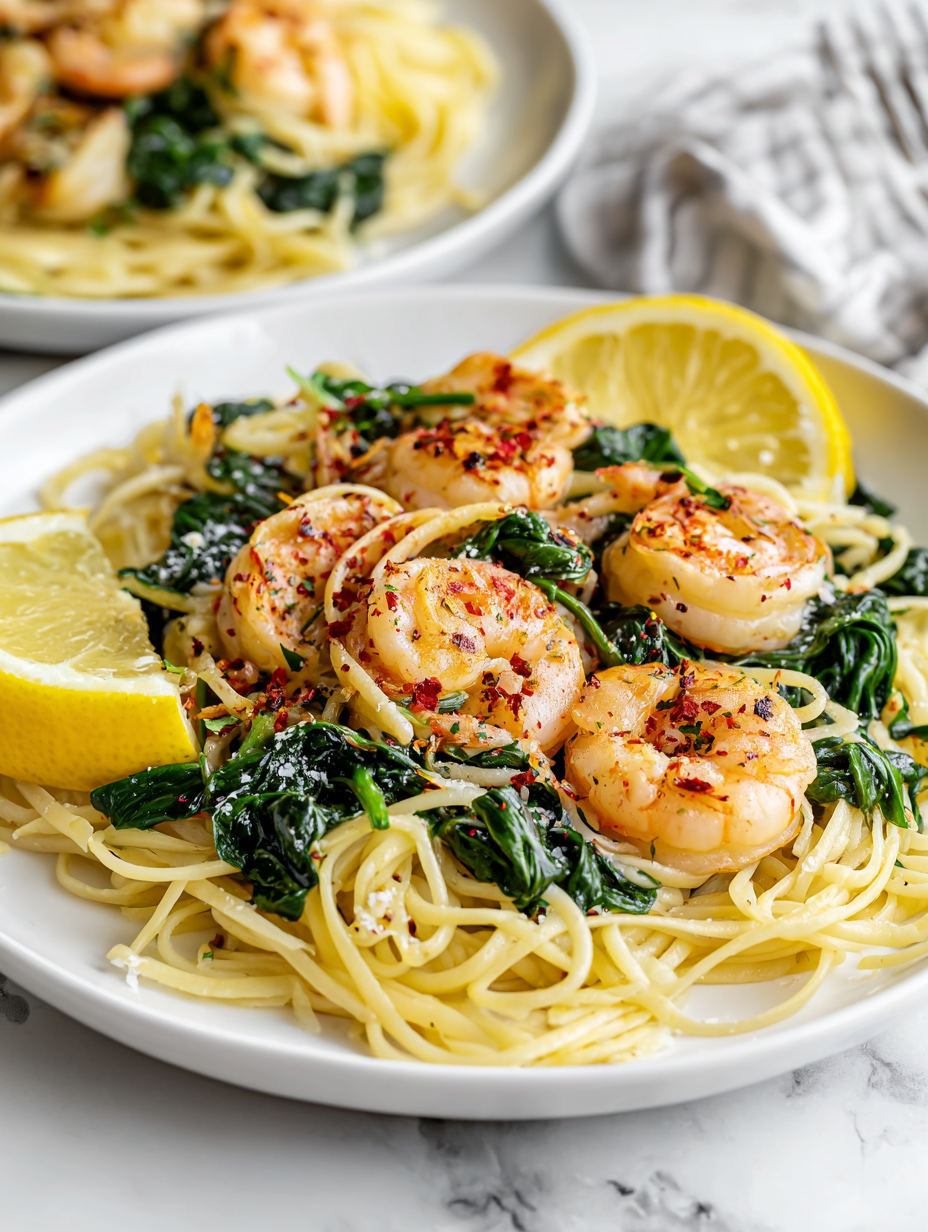
Shrimp Spinach Lemon Pasta with Smoky Paprika
Ingredients
Equipment
Method
- Bring a large pot of salted water to a boil, then cook the pasta until just al dente, about 8 minutes. Drain and set aside, reserving a little pasta water.
- While the pasta cooks, peel and devein the shrimp if needed, then pat them dry with paper towels for better searing.
- Heat 2 tablespoons of olive oil in a large skillet over medium-high heat until shimmering and fragrant.
- Add the shrimp in a single layer and cook for 2-3 minutes per side until they turn pink, slightly caramelized, and fragrant. Remove from the pan and set aside.
- In the same skillet, add the minced garlic and cook for about 30 seconds until fragrant, stirring constantly to avoid burning.
- Sprinkle the smoked paprika into the pan, then quickly stir to toast it lightly, releasing a smoky aroma.
- Return the shrimp to the skillet, then add the cooked pasta, a squeeze of fresh lemon juice, and the lemon zest. Toss everything together, adding reserved pasta water little by little until the sauce becomes silky and coats all ingredients evenly.
- Add the spinach to the skillet and stir gently until wilted, about 30 seconds, until vibrant green and tender.
- Remove from heat, drizzle with a little more olive oil if desired, and season with salt and pepper to taste. Garnish with extra lemon zest or paprika if you like.
- Serve immediately on warmed plates, enjoying the vibrant aroma and tender textures of this quick, flavorful dish.
Notes
Pro tips for perfect shrimp pasta
- Bolded mini-head: Use high heat early → Sear shrimp quickly for caramelization and juicy texture.
- Bolded mini-head: Don’t overcrowd the pan → Cook shrimp in batches if needed to avoid steaming.
- Bolded mini-head: Add lemon zest at the end → Preserve bright citrus aroma and avoid bitterness.
- Bolded mini-head: Taste and adjust seasoning → Lemon, salt, and paprika should pop, not overpower.
- Bolded mini-head: Reserve pasta water → Use it to loosen the sauce and help it cling better.
- Bolded mini-head: Wilt spinach at the last moment → Keep its color vibrant and texture fresh.
- Bolded mini-head: Don’t overcook the pasta → Al dente is key for a firm texture that holds sauce well.
Common mistakes and how to fix them
- OVERCOOKED SHRIMP: Shrimp turn rubbery; remove when just opaque and pink, about 2-3 mins per side.
- SOGGY SPINACH: Wilt it quickly over high heat; add at the end to keep vibrant color and texture.
- PASTA STICKINESS: Salt water generously; stir during boiling; drain immediately to prevent mush.
- LACK OF FLAVOR BALANCE: Taste and adjust lemon, salt, and paprika before serving to brighten and deepen flavors.
Quick fixes and pantry swaps
- When shrimp smell ammonia, splash with lemon juice to freshen and cook immediately.
- If pasta sticks, drain quickly and toss with olive oil before adding to sauce.
- Dumped too much paprika? Shield with a squeeze of lemon to balance smoky intensity.
- Overcooked shrimp? Rescue by tossing in a splash of hot pasta water and serving promptly.
- Pan too dry during searing? Patch with a drizzle of olive oil and crank the heat for quick caramelization.
Prep, store, and reheat tips
- Prep the shrimp: peel and devein ahead, keeping them refrigerated for up to 24 hours. The briny smell will stay fresh, ready to sear.
- Cook the pasta until just al dente, then toss with a little olive oil. Store in an airtight container for up to 2 days—avoid sogginess.
- Wash and dry the spinach thoroughly. Keep in a sealed bag in the fridge for 1-2 days; wilt just before adding to the dish.
- Zest the lemon ahead of time, then refrigerate in a small container. The bright aroma will intensify when used fresh, but it keeps well for 1-2 days.
- Reheat leftovers gently in a skillet over low heat, adding a splash of pasta water or a drizzle of olive oil. Expect the spinach to wilt further and flavors to mellow after sitting.
Top questions about shrimp spinach pasta
1. How do I choose good shrimp?
Use fresh, briny shrimp that smell like the ocean, with a slight sweetness. If you can’t find fresh, frozen works too, just thaw thoroughly.
2. What’s the perfect pasta doneness for this dish?
Cook pasta until just al dente—firm to the bite, not mushy. This helps it hold sauce better and stay vibrant.
3. When should I add lemon zest?
Add lemon zest at the very end to keep its bright, citrus aroma lively and not bitter.
4. How do I know when shrimp are cooked properly?
Cook the shrimp quickly over high heat until pink and lightly caramelized, about 2-3 minutes per side.
5. Can I use regular paprika instead?
Use smoked paprika for a smoky depth; toast it briefly in the pan to release its rich aroma without burning.
6. How do I keep spinach from getting mushy?
Wilt the spinach right at the end, just until vibrant green and tender, to keep its fresh flavor and texture.
7. Why save pasta water?
Reserve some pasta water before draining; it’s perfect for loosening the sauce and helping it cling to the pasta.
8. What if the sauce is too thick or sticky?
If the sauce seems too thick, splash in a little reserved pasta water and toss until silky.
9. How do I avoid overcooking shrimp?
Overcooked shrimp turn rubbery—remove them when just opaque and slightly firm, as they will continue cooking a bit on residual heat.
10. How do I reheat without losing flavor?
Reheat leftovers gently in a skillet over low heat, adding a splash of water or olive oil to revive the sauce and keep spinach vibrant.
This shrimp spinach pasta feels like a little secret I keep coming back to, especially when I want something quick but full of flavor. The smoky paprika and bright lemon zest somehow make it feel celebratory, even on the busiest nights.
It’s a reminder that simple ingredients, treated with a little care, can create a dish that’s both satisfying and lively. No matter the season, it’s a good one to keep in your back pocket for those moments when you crave something honest and bright.